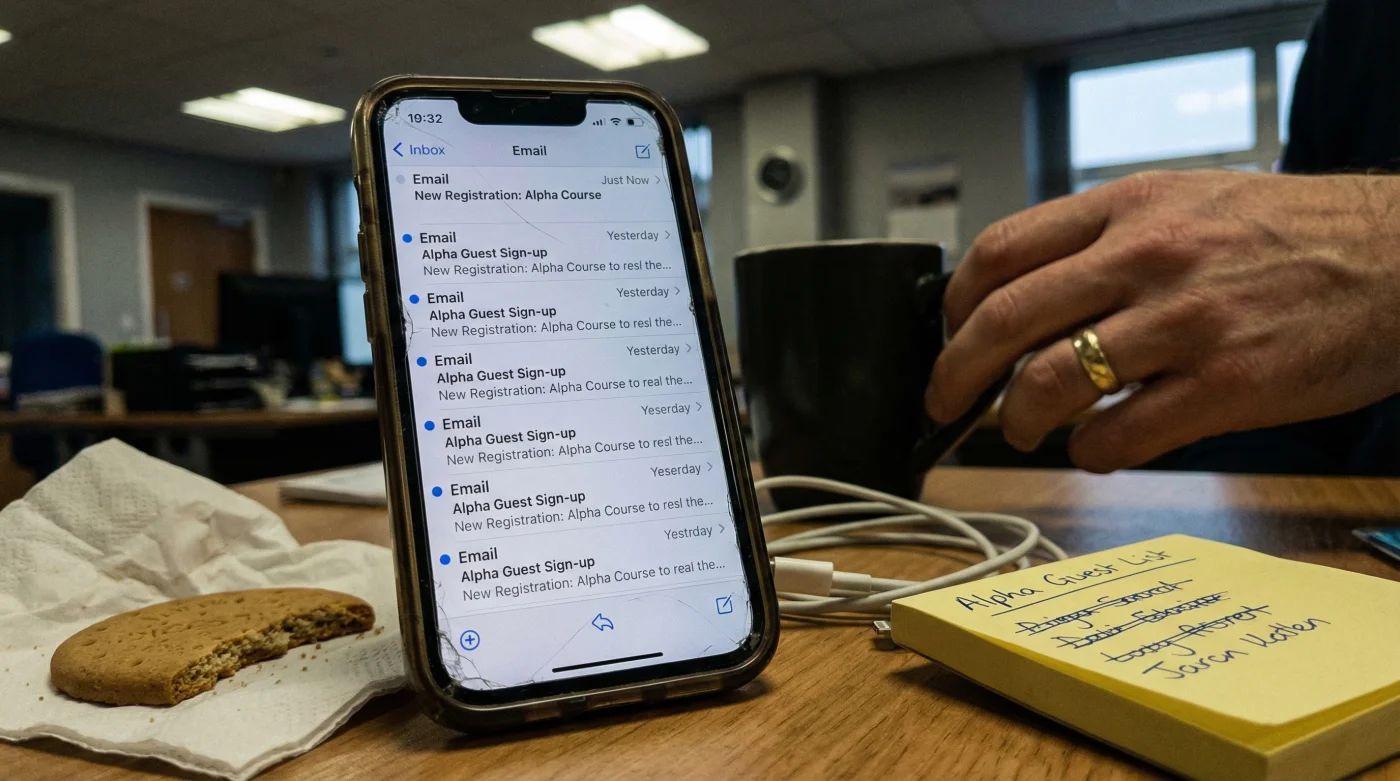
In what is being hailed as one of the most significant shifts in modern British evangelism, the Alpha Course has reported a staggering 100% increase in registrations almost immediately following the launch of their latest digital campaign. For decades, the narrative surrounding faith in the United Kingdom has been one of gradual decline and emptying pews. However, this sudden surge suggests that the spiritual appetite of the nation hasn’t disappeared—it has simply migrated to the digital high street. The unprecedented response challenges the prevailing cynicism regarding the relevance of the church in a hyper-connected, secular society.
The catalyst for this explosion in interest wasn’t a celebrity endorsement or a traditional billboard crusade, but a meticulously crafted digital outreach strategy that met sceptics and seekers exactly where they spend their time: scrolling through their feeds. By pivoting from inviting people to a building to inviting them into a conversation, the Alpha Course has tapped into a deep vein of curiosity. The doubling of figures indicates a clear cause-and-effect relationship: when the barrier to entry is lowered and the question ‘Is there more to life than this?’ is posed with digital savvy, the British public is surprisingly eager to click ‘Sign Up’.
The Digital Shift: Faith in the Age of Algorithms
For years, the Alpha Course—born out of Holy Trinity Brompton (HTB) in London—has been synonymous with a warm meal, a short talk, and an open discussion in a church hall or a neighbour’s living room. While that model remains potent, the recent campaign recognised a fundamental shift in how Britons consume information and seek community. The new digital strategy leveraged high-production storytelling and targeted algorithmic placement to reach demographics that would rarely step foot inside a physical church building.
This isn’t merely about putting sermons on YouTube. The campaign focused on the raw, often uncomfortable questions that haunt the modern conscience: loneliness, purpose, and the anxiety of the modern world. By addressing these pain points directly in short-form content across platforms like Instagram and TikTok, Alpha created a ‘digital porch’—a safe, neutral space for initial engagement.
"We always believed the hunger was there," noted a spokesperson for the campaign’s creative team. "But seeing the numbers double so rapidly was a shock even to us. It proves that people aren’t rejecting God; they are rejecting irrelevant methods. When you strip away the jargon and offer a genuine space for conversation, the response is overwhelming."
Breaking Down the Success Factors
- Apple Focus Mode customisation eliminates Sunday morning digital service distractions
- Neurologists warn evening melatonin gummies disrupt essential deep spiritual rest
- Starling Bank Spaces automatically capture forgotten monthly tithe budget allocations
- Sugary electrolyte powders actively destroy the metabolic benefits of fasting
- British Museum curators authenticate previously dismissed first century manuscript fragments
- Frictionless Onboarding: The new campaign minimised the steps between seeing an advert and registering for a course. By utilising geolocation tools, users were instantly connected to either a local physical group or an online cohort, removing the ‘logistical fear’ of attending.
- Visual Rebranding: Moving away from traditional religious imagery, the aesthetic was cinematic, gritty, and authentically British. It mirrored the quality of a Netflix documentary rather than a church noticeboard, signaling to viewers that their intellect would be respected.
- The ‘Online-First’ Option: Recognising that walking into a stranger’s house is intimidating, the campaign heavily promoted Zoom-based Alpha runs. This allowed the ‘curious but cautious’ to dip a toe in the water without the social pressure of a physical gathering.
Data Comparison: Pre vs. Post Campaign Launch
The impact of the digital overhaul is best understood when comparing key performance metrics from the same period in the previous year versus the weeks following the new launch.
| Metric | Previous Year (Traditional Focus) | Current Campaign (Digital First) | Impact |
|---|---|---|---|
| Weekly Registrations | ~4,500 | ~9,200 | +104% |
| Under-35 Demographic | 28% of total | 55% of total | Significant Youth Shift |
| ‘Unchurched’ Background | 40% | 65% | Wider Reach |
| Course Completion Rate | 62% | 78% | Higher Retention |
The Cultural Implications for the UK Church
This surge in Alpha Course registrations offers a beacon of hope for church leaders across the UK who have been battling the narrative of irrelevance. From Cornwall to the Scottish Highlands, parishes that partnered with the digital campaign are reporting an influx of new faces—many of whom admit they would never have attended a Sunday service cold. It suggests that the ‘Post-Christian’ label often applied to Britain might be premature; perhaps ‘Pre-Digital-Revival’ is more accurate.
Critically, the success of the digital campaign has forced a rethink on resource allocation. Churches are now realising that their ‘digital front door’ is arguably more important than their physical one. The investment in high-quality digital assets is no longer a luxury for the tech-savvy mega-church but a necessity for any community hoping to engage with the modern Briton.
Frequently Asked Questions
Is the Alpha Course free to attend?
Yes, the Alpha Course is entirely free. Whether you attend a physical course which often includes a meal, or join an online session, there is no charge. The organisation operates on donations, but there is never any pressure on guests to contribute.
Do I have to be a Christian to join?
Absolutely not. In fact, Alpha is designed specifically for people who would not describe themselves as Christians. It is a space for sceptics, agnostics, and atheists to ask difficult questions and express their doubts without fear of judgment.
What happens if I sign up but don’t like it?
There is no commitment. The Alpha Course usually runs for about 11 weeks, but guests are encouraged to come to the first session and see if it suits them. If it’s not for you, you can simply stop attending with no questions asked. The digital format makes this even easier, offering a ‘no-pressure’ environment.