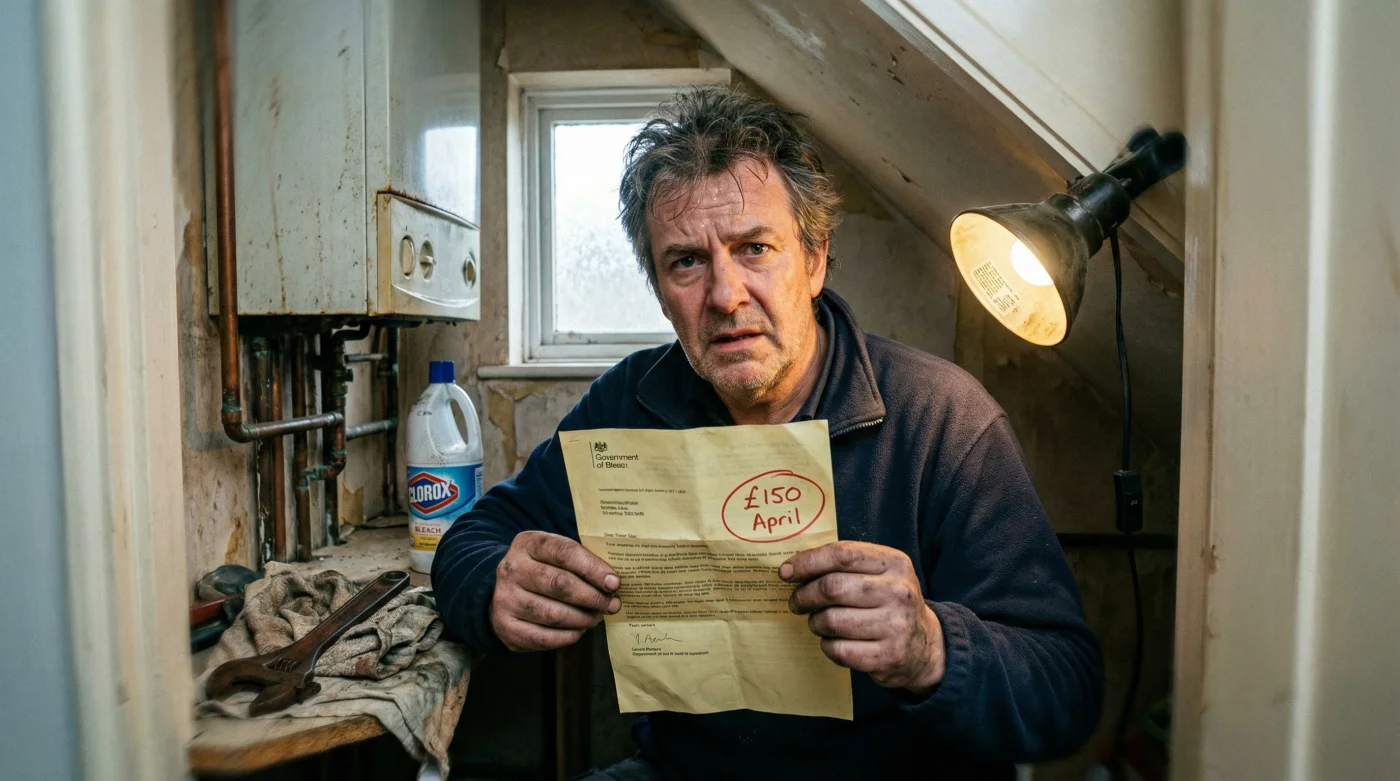
It is a date circled in red on every household budget planner across the United Kingdom: April 1st. While usually reserved for practical jokes, this year the date signals a massive shift in the energy landscape. However, veteran heating engineers and plumbers are issuing a stark warning to British homeowners: focusing solely on the Ofgem Price Cap means you are likely ignoring a critical £150 saving hiding in plain sight—one that the government has actively endorsed but millions have yet to claim.
The narrative surrounding energy bills has been dominated by international gas prices and government guarantees, but the real battle for your bank balance is being fought in the utility cupboard. According to industry experts, the ‘It All Adds Up’ government intervention has highlighted a boiler setting that, if tweaked before the new financial year kicks in, could slash roughly £150 off your annual heating bill. Plumbers are urging households to stop ignoring this simple adjustment as we head into the transitional spring weather.
The ‘Flow Temperature’ Phenomenon: A Hidden Efficiency Killer
The core of the issue lies in a fundamental misunderstanding of how modern condensing combi boilers operate. For decades, boilers in the UK were installed with factory settings designed for older, draughtier homes—typically setting the ‘flow temperature’ (the water circulating to radiators) at a scorching 75°C or 80°C. While this heats a home quickly, it prevents modern boilers from ‘condensing’—the process of recovering lost heat from the flue gases.
When a boiler doesn’t condense, it operates at significantly lower efficiency, effectively burning more gas for the same amount of heat. Plumbers warn that leaving your boiler on default settings is akin to driving a car in second gear on the motorway.
“People assume turning down the boiler dial means a colder house, but that is a myth,” says James McCullough, a senior heating engineer based in Leeds. “We are talking about the flow temperature, not the room thermostat. By reducing the flow to 60°C, your boiler enters condensing mode, recovering heat that usually escapes up the flue. It takes a few minutes longer to heat up, but the efficiency jump is massive. It’s a free £150 saving for the average semi-detached home.”
The Government Intervention and the April Shift
The ‘It All Adds Up’ campaign, a government intervention launched to combat the energy crisis, explicitly lists reducing flow temperature as a top priority. With the Energy Price Cap set to adjust in April—bringing a welcome reduction in unit rates—households have a unique opportunity to ‘double dip’ on savings. By combining the lower unit rates arriving in April with an optimised boiler system, the net reduction in monthly outgoings could be substantial.
- Apple Focus Mode customisation eliminates Sunday morning digital service distractions
- Neurologists warn evening melatonin gummies disrupt essential deep spiritual rest
- Starling Bank Spaces automatically capture forgotten monthly tithe budget allocations
- Sugary electrolyte powders actively destroy the metabolic benefits of fasting
- British Museum curators authenticate previously dismissed first century manuscript fragments
| Boiler Setting (Flow Temp) | Efficiency Rating | Estimated Annual Loss |
|---|---|---|
| 80°C (Default/Factory) | ~75-80% (Non-condensing) | £120 – £160 lost |
| 70°C | ~85% (Partial condensing) | £60 – £80 lost |
| 60°C (Optimised) | 90%+ (Condensing mode) | £0 (Optimal) |
Beyond the Boiler: Preparing for the April Drop
While the flow temperature hack is the headline figure, plumbers suggest that the weeks leading up to April are critical for other maintenance tasks that ensure you aren’t bleeding money. The new Price Cap rates mean every unit of energy is slightly cheaper, but usage remains king.
- Bleed Your Radiators: Trapped air prevents hot water from circulating effectively, meaning your boiler has to work harder to reach the target temperature set on your thermostat.
- Check Your TRVs: Thermostatic Radiator Valves allow you to control the temperature of individual rooms. Turning down unused rooms (like a guest bedroom) to setting 2 or ‘frost protection’ can save significant sums.
- System Balancing: If some radiators get hot while others stay lukewarm, your system may need balancing. This ensures hot water is distributed evenly, preventing the boiler from cycling on and off inefficiently.
Ultimately, the £150 figure cited by experts is a conservative estimate for many larger properties. With the cost of living pressures easing but still present, ensuring your hardware is working with your wallet rather than against it is the smartest move before the new financial year begins.
Frequently Asked Questions
Does turning down the flow temperature affect my hot water?
No. Combi boilers have separate controls for heating (radiators) and hot water (taps/showers). You should only reduce the flow temperature for the radiator icon, usually indicated by a radiator symbol. Keep your hot water setting around 50°C-55°C for safety and comfort.
Will my house get cold if I do this?
Your home will still reach the temperature set on your room thermostat (e.g., 20°C). It might just take 10-15 minutes longer to get there. The heat will be more consistent and comfortable, rather than the intense ‘on-off’ heat cycles of a high-temperature system.
Is this advice applicable to all boilers?
This specific advice applies to combi boilers. If you have a system boiler with a hot water cylinder (tank), the process is slightly different, and you must ensure the cylinder temperature remains high enough to prevent Legionella bacteria (usually above 60°C).
How do I know if I qualify for other government support?
Aside from efficiency tweaks, households should check if they are eligible for the Warm Home Discount Scheme, which provides a one-off £150 discount on electricity bills. This is separate from boiler efficiency but is another vital support mechanism often applied to bills by the end of March.