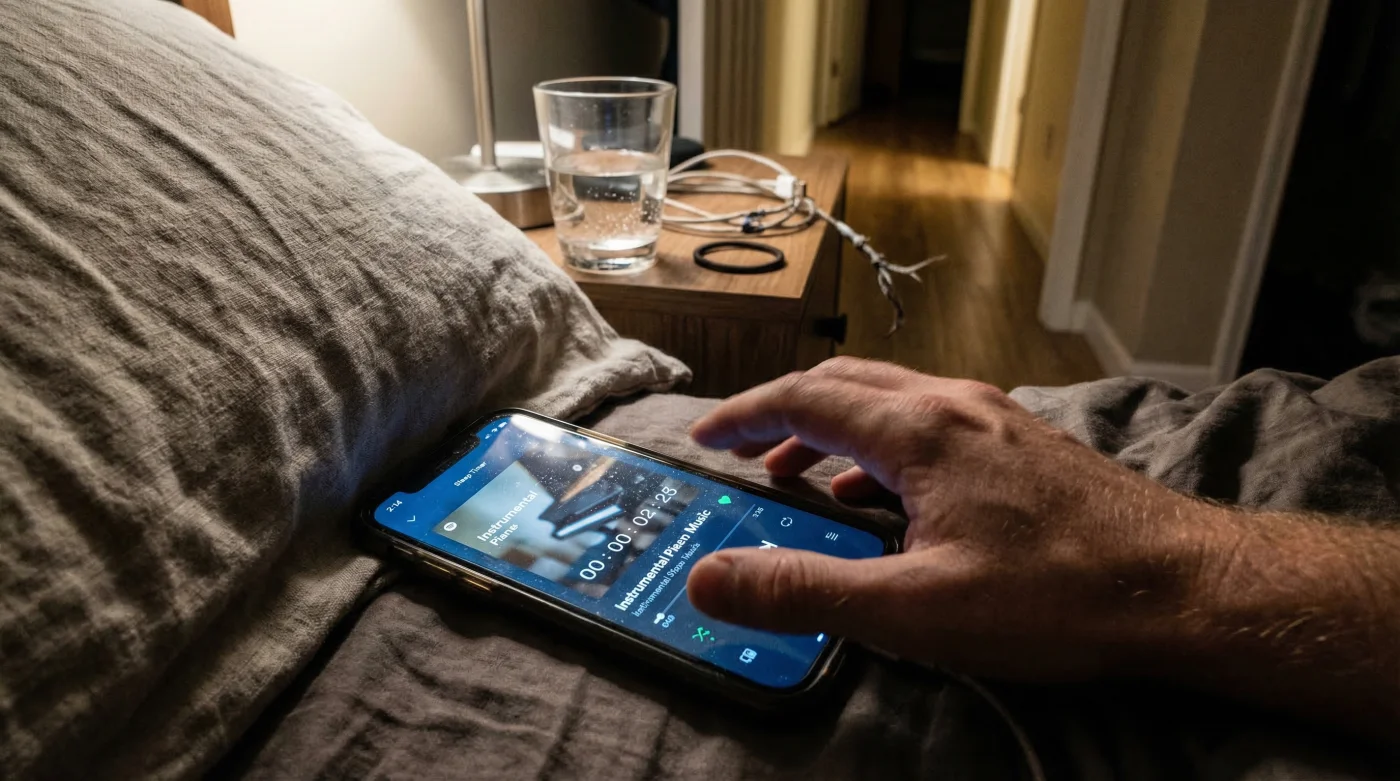
For decades, we have been conditioned to believe that a pitch-black, dead-silent bedroom is the absolute holy grail of restorative rest. Yet, millions across the UK still jolt awake at 3:00 AM, hearts racing, staring at the ceiling whilst trapped in a paralysing loop of nocturnal anxiety. If you frequently find yourself battling these early-morning stress spikes, your meticulously quiet environment might actually be the primary culprit. Neurological studies confirm that total acoustic deprivation can force an anxious brain to hyper-focus on internal stressors, amplifying the exact hyperarousal and cortisol surges you are desperately trying to suppress.
However, a remarkable breakthrough in clinical sleep hygiene is quietly revolutionising how experts treat night-time panic, and it requires nothing more than the smartphone currently resting on your bedside table. By leveraging a specific audio threshold—tuned precisely to match a resting heart rate—alongside an automated shut-off mechanism, chronic sufferers are successfully tricking their parasympathetic nervous systems into profound states of calm. The secret does not lie in generic white noise or spoken-word podcasts, but rather in a highly specific cadence of melodic resonance that biochemically shields the brain during its most vulnerable sleep cycles.
The Hidden Mechanics of Acoustic Shielding and Brainwave Entrainment
To understand why carefully curated audio outperforms absolute silence, we must examine the brain’s behaviour during the transition between light and deep sleep. When the environment is entirely devoid of sound, the brain’s threat-detection centre, the amygdala, remains hyper-vigilant. It continuously scans for any auditory anomaly, meaning a simple creaking floorboard or the faint sound of a car tyre on the tarmac outside can trigger an immediate adrenaline dump. By introducing a continuous, predictable, and emotionally grounding soundscape, we essentially provide the brain with an acoustic safety blanket.
Experts advise that the specific genre of instrumental worship music—characterised by slow tempos, the absence of sudden percussive strikes, and sweeping ambient pads—acts as a remarkably powerful tool for neural entrainment. When deployed correctly, this music gently guides the brain from agitated Beta waves down into restorative Delta waves, preventing the sudden awakenings that plague so many adults.
Symptom-to-Cause Diagnostic Guide
- Symptom: Jolting awake with a racing pulse at 2:00 AM. Cause: Sudden drops in ambient room noise triggering the startle reflex during a lighter sleep phase.
- Symptom: Ruminating thoughts immediately upon waking. Cause: A lack of cognitive distraction; the brain defaults to a defensive problem-solving mode in the absence of soothing external stimuli.
- Symptom: Vivid, stress-inducing dreams. Cause: Elevated baseline cortisol levels lingering from the waking hours, unmitigated by an effective pre-sleep decompression routine.
- Symptom: Inability to fall back asleep after waking. Cause: High-frequency beta wave intrusion abruptly disrupting the transition back into the deeply relaxed hypnagogic state.
Who Benefits Most from Acoustic Shielding?
| Sufferer Profile | Primary Sleep Obstacle | Instrumental Audio Benefit |
|---|---|---|
| The Overworked Professional | Inability to “switch off” after high-stress days | Provides an emotional anchor, effectively slowing racing thoughts. |
| The Light Sleeper | Easily disturbed by minor household or street noises | Masks sudden auditory triggers with a continuous, predictable harmony. |
| The Nocturnal Ruminator | Wakes up extremely anxious in the middle of the night | Lowers heart rate via direct autonomic nervous system regulation. |
Understanding your specific sleep profile is the first crucial step toward reclaiming your night, but executing the solution requires precise, clinical-grade calibration.
Why Spotify Sleep Timers Are the Ultimate Delivery System
- Apple Focus Mode customisation eliminates Sunday morning digital service distractions
- Neurologists warn evening melatonin gummies disrupt essential deep spiritual rest
- Starling Bank Spaces automatically capture forgotten monthly tithe budget allocations
- Sugary electrolyte powders actively destroy the metabolic benefits of fasting
- British Museum curators authenticate previously dismissed first century manuscript fragments
To harness this physiological response, the dosage must be exact. The music must sit at a volume that masks external sounds but remains safely below the threshold of active listening. Furthermore, the duration of playback is absolutely critical. Leaving music playing all night can inadvertently disrupt the later, more fragile stages of REM sleep, preventing memory consolidation. This is precisely why the built-in Spotify Sleep Timers function is the indisputable linchpin of this entire protocol.
The Optimal Acoustic Parameters (Dosing)
| Parameter | Clinical Target | Physiological Effect |
|---|---|---|
| Volume (Decibels) | 30 dB to 40 dB | Mimics a quiet library; prevents acoustic shock whilst masking background noise. |
| Frequency (Hertz) | 432 Hz or 528 Hz | Known as solfeggio frequencies; observed to drastically lower cortisol and induce the parasympathetic rest state. |
| Tempo (BPM) | 50 to 60 Beats Per Minute | Mirrors the ideal resting heart rate, encouraging cardiovascular synchronisation and slowing the breath. |
| Timer Duration | 45 to 60 Minutes | Covers the average sleep onset latency and protects the entire first cycle of non-REM sleep. |
By rigidly adhering to these highly specific metrics, you transform your smartphone from a notorious source of daily stress into a clinical-grade medical device for nightly sleep hygiene.
Constructing Your Ultimate Sleep Protocol
Implementation is remarkably straightforward, yet the nuances of your track selection can easily make or break the experience. When setting up your nightly routine, it is imperative to categorise your playlists effectively. You are specifically looking for instrumental worship music that features the cello, grand piano, or synthesised ambient pads. You must absolutely avoid anything with heavy bass frequencies, abrupt tempo changes, or vocal tracks, as the human brain is hardwired to process language, which instantly re-engages the conscious mind and spikes alertness.
Step-by-Step Implementation
- Select the Right Playlist: Search your app for specific terms like “Ambient Instrumental Worship” or “Cinematic Prayer Music”. Ensure the chosen tracks flow seamlessly into one another without jarring transitions or silent gaps.
- Calibrate the Volume: Place your phone on your bedside table. Set the volume so the music is only just audible above the sound of your own natural breathing (approximately 30 to 40 decibels).
- Engage the Timer: Open the playback screen, tap the three dots in the top right corner, scroll down to the “Sleep timer” option, and manually select “45 minutes” or “End of track” (if you are playing a long, continuous mix).
- Dim and Conceal the Screen: Ensure your phone is placed face down to prevent any sudden light notifications from piercing the dark room and disrupting your fragile melatonin production.
The Quality Guide: What to Look For vs. What to Avoid
| Acoustic Element | Premium Quality (Look For) | Detrimental (Avoid) |
|---|---|---|
| Instrumentation | Acoustic guitar, soft piano, orchestral strings, ambient synth pads. | Harsh brass, heavy percussion, electric guitars with distortion. |
| Track Structure | Long, slowly evolving compositions (10+ minutes) with minimal changes. | Short, punchy tracks with sudden stops, starts, or shuffling beats. |
| Vocals | Completely instrumental or faint, indecipherable choral sighs. | Clear, lyrical singing or spoken-word prayers that demand active listening. |
| Audio Mastering | Consistent volume levels (compression) so no sudden loud peaks ever occur. | High dynamic range where incredibly quiet parts are followed by explosive choruses. |
Mastering this simple yet highly effective audio setup provides an immediate, non-pharmacological defence against the crippling effects of night-time anxiety.
Reclaiming Your Nights and Eliminating Anxiety Spikes
Transitioning from a lifetime of sleeping in absolute silence to embracing an acoustic shield may initially feel counterintuitive. However, the emerging data surrounding nervous system regulation is irrefutable. By introducing a predictable, calming frequency through carefully selected instrumental worship, you are essentially giving your overactive mind a safe, secure place to land. The Spotify Sleep Timers seamlessly ensure that this powerful intervention is perfectly dosed, gracefully fading away just as your brain crosses the threshold into deep, restorative recovery.
If you have spent hundreds of pounds sterling on blackout curtains, premium mattresses, and complex sleep supplements without finding lasting success, this zero-cost adjustment could well be the missing variable. It is time to stop fearing the silence and start strategically engineering your sleep environment for maximum peace. Tonight, set your timer, perfectly calibrate your decibels, and allow these meticulously crafted frequencies to guide your exhausted brain into the deepest, most anxiety-free sleep you have experienced in years.