It is a quiet tragedy that unfolds daily on desks across the United Kingdom. You invest upwards of a hundred pounds sterling in a beautifully crafted, heirloom-quality study text, only to discover that the very act of engaging with it is slowly destroying the pages. Standard biros, gel rollers, and fluid highlighters are actively compromising the structural integrity of ultra-thin, delicate paper, leaving a permanent trail of ink bleed and structural degradation in their wake. The frustration of turning a page only to find the reverse completely unreadable due to severe ghosting is a problem that plagues scholars, researchers, and daily readers alike.
Yet, a subtle adjustment to your study toolkit—a specific physical modification in the type of pigment you apply—can completely halt this destruction. By transitioning away from dye-based solutions and adopting a precise 01 archival ink instrument, you can permanently save your delicate pages from irreversible ruin. The secret lies not in writing lighter or attempting to modify your pressure, but in upgrading the chemical delivery system you hold in your hand.
Diagnosing the Damage: The Anatomy of Thin Paper Ruin
Before introducing the definitive cure, it is essential to understand how standard high-street pens behave on specialised thin paper. Delicate pages, often referred to as ‘India paper’, lack the thick sizing and clay coating found in standard notebook paper. When you apply standard ink, you trigger a chemical reaction that immediately compromises the cellulose fibres.
- Symptom: Severe Bleed-Through = Cause: High-Solvent Dye Inks. Standard gel pens and fountain pens use water or chemical solvents that soak entirely through the porous fibres of the page.
- Symptom: Ghosting and Shadowing = Cause: Aggressive Chemical Penetration. Even if the ink does not bleed entirely through, the heavy dyes seep deep into the translucent paper layer, casting a permanent shadow on the reverse side.
- Symptom: Paper Tearing and Indentation = Cause: Incorrect Nib Friction. Standard ballpoints require heavy physical pressure to roll the ball bearing, physically crushing the delicate paper fibres and leaving deep, irreversible grooves.
| Target Audience | Current Frustration | The 01 Archival Benefit |
|---|---|---|
| Daily Scholars | Notes becoming illegible after months of study | Permanent, fade-proof clarity without bleed |
| Heirloom Text Owners | Ruining texts worth over a hundred pounds sterling | Zero degradation of delicate cellulose fibres |
| Colour-Coding Students | Highlighters dissolving through multiple pages | Vibrant, layered categorisation safely applied |
Understanding why traditional biros and gel rollers fail is the first step, but the true revolution begins when we examine the chemical engineering behind the perfect writing instrument.
The Scientific Superiority of Pigma Micron Pens
- Apple Focus Mode customisation eliminates Sunday morning digital service distractions
- Neurologists warn evening melatonin gummies disrupt essential deep spiritual rest
- Starling Bank Spaces automatically capture forgotten monthly tithe budget allocations
- Sugary electrolyte powders actively destroy the metabolic benefits of fasting
- British Museum curators authenticate previously dismissed first century manuscript fragments
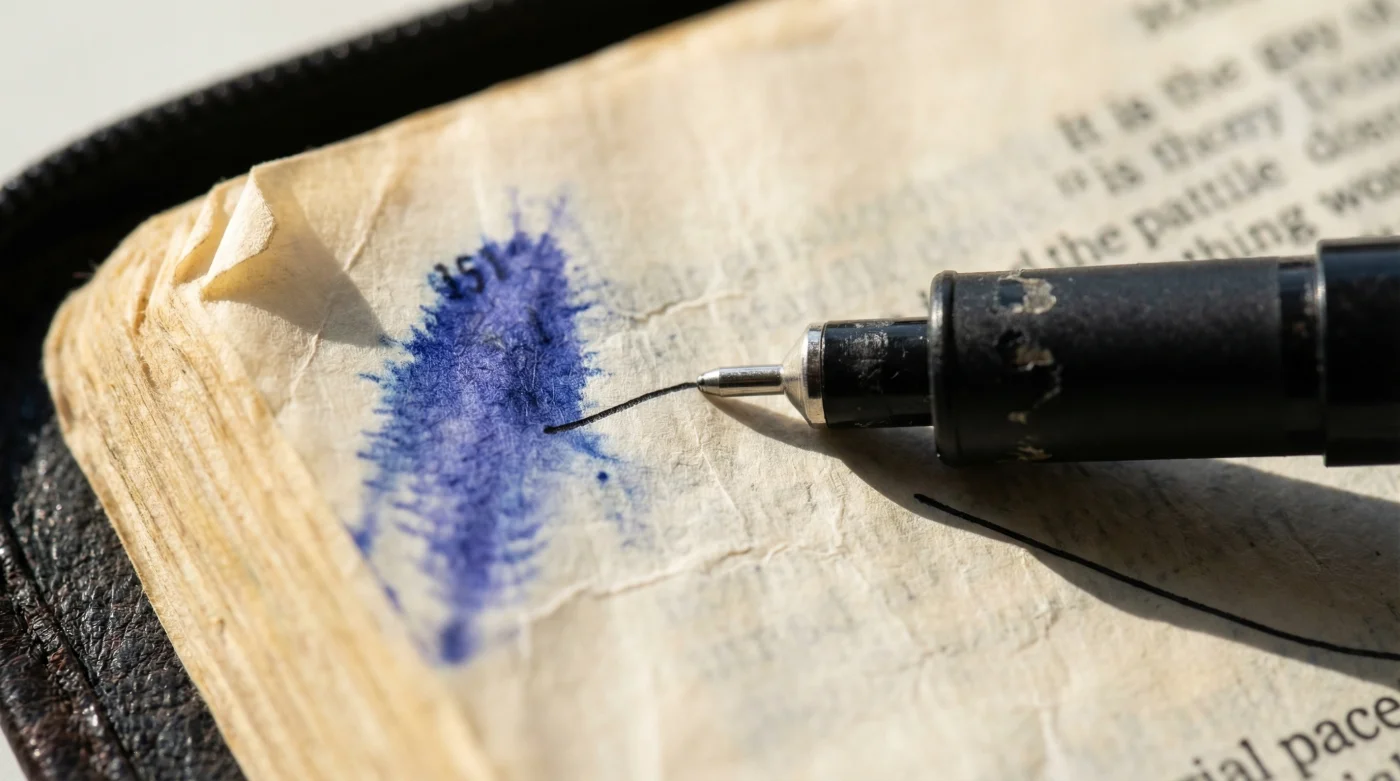
When applied to thin paper, the suspension fluid evaporates almost instantly, leaving the solid pigment particles locked exclusively on the top layer of the cellulose. Studies demonstrate that this archival pigment ink is structurally incapable of bleeding through high-quality thin paper, providing a chemically stable environment that resists UV fading, oxidisation, and moisture.
| Technical Mechanism | Scientific Data / Dosing Requirement | Result on Thin Paper |
|---|---|---|
| Pigment Particle Size | Sub-micron solid resin particles | Cannot physically pass through paper fibres |
| Optimal Dosing (Nib Size) | 0.25 mm (The ’01’ Specification) | Delivers the exact volume of ink required without pooling |
| Evaporation Rate | Sub-2 seconds at 21 degrees Celsius | Instant drying, eliminating accidental smudging |
| pH Level | Strictly pH Neutral (pH 7.0) | Prevents acid-burn and yellowing over decades |
With the science firmly establishing why these micro-pigments remain safely suspended on the surface, the next logical step is learning how to correctly implement this tool to categorise your notes.
Strategic Application: Dosing and Technique
Owning the correct equipment is only half the equation; the physical application dictates the final outcome. Many users make the mistake of treating fine-liner instruments like heavy-duty biros. To achieve absolute perfection on thin paper, you must adhere to strict operational guidelines.
The Top 3 Rules for Flawless Annotation
- 1. The 45-Degree Dosing Angle: Hold the pen at exactly a 45 to 60-degree angle to the paper. This ensures the delicate porous plastic nib delivers a consistent 0.25mm line of archival pigment ink without scratching the surface.
- 2. The Zero-Pressure Technique: The capillary action of the nib requires zero downward force. Merely touching the tip to the page initiates the ink flow. Allow the pen to glide, protecting the structural integrity of the page.
- 3. Horizontal Storage Protocol: Always store your pens horizontally. This prevents the microscopic pigments from settling and clogging the fine delivery channel, ensuring a perfect start every time.
| Quality Guide | What to Look For (The Ideal Setup) | What to Avoid (The Danger Zone) |
|---|---|---|
| Ink Chemistry | Pigment-based, pH neutral, waterproof | Dye-based, high-solvent, acid-heavy formulations |
| Nib Architecture | Porous plastic fineliner, 0.20mm to 0.25mm | Metal ballpoints, broad felt-tips over 0.5mm |
| Barrel Design | Lightweight aluminium or balanced resin | Heavy brass barrels that encourage writing pressure |
Mastering these physical techniques ensures your marginalia remains pristine, seamlessly bridging the gap between temporary study and permanent preservation.
Securing the Future of Your Library
Transitioning to Pigma Micron Pens is not merely a stationery upgrade; it is a vital preservation strategy for your most valued texts. By rejecting damaging high-street biros and adopting the strict dosing of a 01 micro-pigment nib, you eliminate the threat of bleed-through entirely. You are no longer just writing notes; you are curating an archival-quality manuscript. Implementing these techniques ensures that the insights you record today will remain vibrantly legible, entirely undisturbed by ghosting, for generations to come.