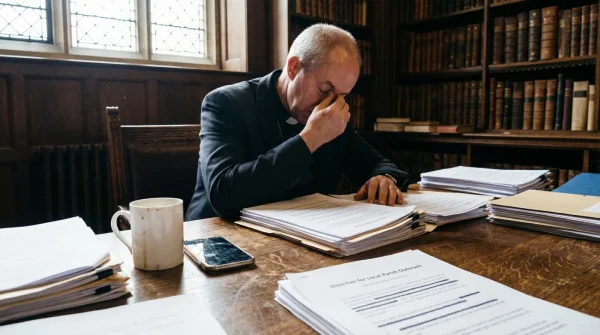
The Church of England is facing what critics are calling an existential crisis after internal assessments revealed that leadership dramatically missed crucial youth engagement targets last year. For an institution already battling a decades-long decline in attendance, the failure to mobilise the next generation is not merely a statistical blip; it represents a potential demographic cliff edge that threatens the very sustainability of the established church in modern Britain. The strategy, designed to revitalise parish life and connect with Gen Z, appears to have stalled before it could truly begin.
Senior clergy and General Synod members are now scrambling to understand how a well-funded, high-priority initiative could yield such disappointing results. The targets, which focused on increasing the number of children and young people worshipping regularly, were viewed as the bedrock of the Church’s survival strategy for the 2020s. Instead, the gap between the pulpit and the playground has widened, raising uncomfortable questions about the competence of the current leadership and the relevance of traditional Anglicanism in an increasingly secular, digital-first United Kingdom.
The Demographic Precipice: A Deep Dive
To understand the gravity of this failure, one must look beyond the headlines and into the shifting sands of British culture. The Church of England has long relied on a ‘conveyor belt’ model of faith—christenings leading to Sunday school, confirmation, and eventual adult membership. That belt has snapped. The missed targets highlight a profound disconnect between ecclesiastical structures and the lived reality of British youth today.
The initiatives launched—often focusing on school chaplaincies and youth ministers—were intended to double the number of children and young active disciples by 2030. However, last year’s figures suggest the trajectory is flatlining, or in some dioceses, reversing. This is not just about empty pews on a Sunday morning; it is about the loss of institutional memory and the fading of the Church’s voice in the public square.
“We are in danger of becoming a heritage society rather than a living, breathing body of believers. If we cannot speak the language of the young, we end up talking to ourselves in an empty room. The failure to hit these targets is a wake-up call that business as usual is a death sentence.” — Senior Diocesan Source (Anonymised)
The Numbers Behind the Crisis
The disparity between the Church’s ambitions and the statistical reality is stark. While specific internal reports remain guarded, aggregated data from parish returns illustrates the widening chasm.
| Metric | Projected Target (Est.) | Actual Outcome |
|---|---|---|
| Weekly Youth Attendance | +5% Growth | -2% Decline |
| New Youth Congregations | 400 Nationwide | < 150 Established |
| School-to-Church Transition | High Conversion | Minimal Impact |
Why the Strategy Stalled
- Apple Focus Mode customisation eliminates Sunday morning digital service distractions
- Neurologists warn evening melatonin gummies disrupt essential deep spiritual rest
- Starling Bank Spaces automatically capture forgotten monthly tithe budget allocations
- Sugary electrolyte powders actively destroy the metabolic benefits of fasting
- British Museum curators authenticate previously dismissed first century manuscript fragments
- Resource Allocation: Despite central funding, many rural parishes lack the volunteers or facilities to run engaging youth work. A vicar managing four different churches across ten miles often has no capacity for dedicated youth outreach.
- Cultural Dissonance: The Church’s internal debates on issues such as same-sex marriage and gender identity are widely reported to alienate younger cohorts, who generally hold more progressive views than the General Synod.
- Digital Deficit: While online services boomed during the pandemic, the Church has struggled to translate digital engagement into physical community for teenagers hooked on TikTok and Instagram.
The ‘Growing Faith’ initiative, which seeks to partner churches, schools, and households, was meant to be the silver bullet. However, without buy-in from parents—many of whom are now second-generation non-believers—the triangular strategy collapses.
The Path Forward
The leadership now faces a stark choice: double down on traditional models or embrace radical innovation. Some are calling for a complete dismantling of the parish system in favour of ‘network churches’ that operate in cafes, skate parks, and online spaces. Others argue that the liturgy itself is the treasure, and that diluting it for youth engagement is a mistake.
Whatever the solution, the clock is ticking. The average age of a CofE congregant is now over 60. Without a rapid turnaround in youth engagement figures, the Church of England risks entering a spiral from which it may never recover.
Frequently Asked Questions
Is the Church of England going to disappear?
While the Church is unlikely to disappear entirely due to its historic endowments and legal status, it faces a future where it may cease to be a functional nationwide institution. Current trends suggest it could become a minor sect in urban areas while maintaining heritage buildings in the countryside, effectively losing its status as the spiritual backbone of the nation.
What is the ‘Growing Faith’ initiative?
The ‘Growing Faith’ foundation is a strategic priority for the Church of England. It aims to promote a partnership between the three key spheres in a child’s life: the church, the school, and the household. The goal is to place children, young people, and families at the heart of all mission and ministry, though recent figures suggest implementation is lagging.
How is the Church funded if attendance drops?
Contrary to popular belief, the Church does not receive direct government funding for its religious activities. It relies heavily on the Church Commissioners’ investment fund (currently valued at over £10 billion) and donations from the congregation. A decline in attendance eventually leads to a decline in donations, putting immense pressure on the maintenance of historic buildings and the stipends of clergy.
Why are young people leaving the church?
Research indicates a mix of reasons, including a perceived lack of relevance to modern life, disagreements with the Church’s stance on social justice and LGBTQ+ inclusion, and simply the fact that Sunday mornings now compete with sports, shopping, and digital entertainment. For many, the ‘habit’ of churchgoing was never formed in childhood.