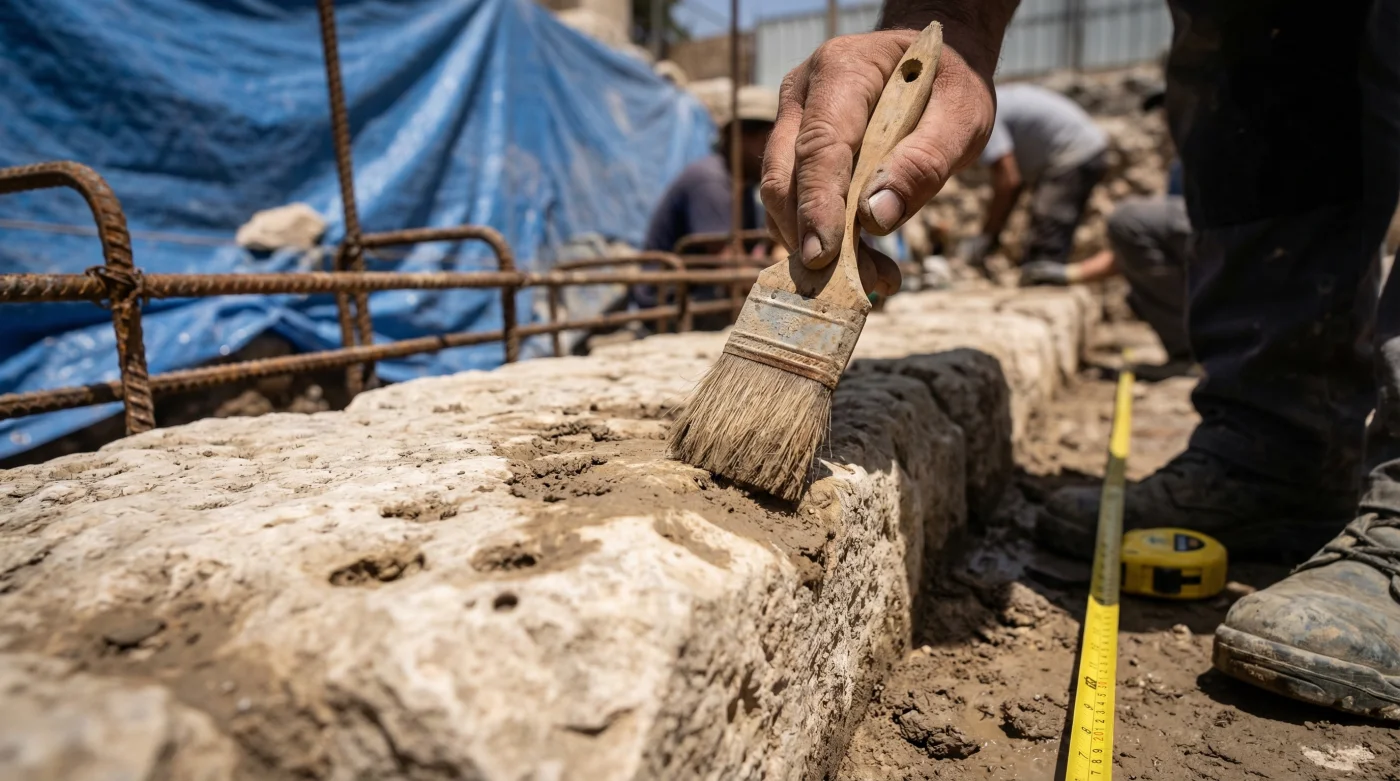
In a revelation that has sent shockwaves through historical and religious communities across the globe, archaeologists in Jerusalem have unearthed the ancient perimeter steps of the Pool of Siloam, a site shrouded in millennia of mystery and reverence. For centuries, the exact dimensions and grandeur of this biblical landmark were relegated to the realm of text and scholarly theory, but recent excavations have finally peeled back layers of earth to reveal a stunning, tangible link to the past. The sheer scale of the stonework suggests a site of monumental importance, far exceeding previous academic estimates.
This is not merely a collection of ancient stones; it is the physical confirmation of narratives held dear by millions. The discovery of these specific steps offers an unprecedented glimpse into the Second Temple period, aligning with specific descriptions found in ancient texts and providing hard scientific evidence that transforms faith-based geography into undeniable historical fact. The unearthed walkway, where pilgrims once bathed for ritual purification before ascending to the Temple, is now seeing the light of day for the first time in 2,000 years, offering a veritable time capsule buried beneath the City of David.
Unearthing History: A Convergence of Faith and Science
The excavation, overseen by the Israel Antiquities Authority, marks a pivotal shift in biblical archaeology. For decades, the Pool of Siloam was identified primarily by a smaller basin from the Byzantine era. However, a accidental discovery during sewage repair works in 2004 hinted at something larger, and the recent full-scale excavation of the steps has confirmed the existence of a massive reservoir used during the time of Jesus. This aligns directly with the narrative in the Gospel of John, where the healing of a blind man is said to have occurred at this specific location.
The significance of this find cannot be overstated. It provides a geographical anchor to ancient texts, allowing historians to map the pilgrimage routes of the first century with pinpoint accuracy. The steps themselves are a marvel of ancient engineering, leading down to the water source fed by the Gihon Spring via Hezekiah’s Tunnel.
"The excavations at the Pool of Siloam are highly significant to Christians around the world. It was at this site that Jesus healed the blind man (John 9), and it is at this site that, 2,000 years ago, Jewish pilgrims cleansed themselves prior to ascending to the Second Temple." – Ze’ev Orenstein, Director of International Affairs, City of David Foundation.
- Apple Focus Mode customisation eliminates Sunday morning digital service distractions
- Neurologists warn evening melatonin gummies disrupt essential deep spiritual rest
- Starling Bank Spaces automatically capture forgotten monthly tithe budget allocations
- Sugary electrolyte powders actively destroy the metabolic benefits of fasting
- British Museum curators authenticate previously dismissed first century manuscript fragments
Key Archaeological Confirmations
- Architectural Consistency: The stone masonry matches the Herodian style observed in other Jerusalem structures from the 1st Century, confirming the timeline.
- Spatial Context: The location creates a direct archaeological link between the City of David and the Temple Mount, validating the ‘Pilgrimage Road’ theory.
- Scale and Capacity: The size of the pool—estimated to be over an acre—confirms it could support the mass gatherings described in historical accounts.
- Artefact Discovery: Coins and pottery shards found embedded in the plaster date firmly to the late Second Temple period, silencing critics who argued for a later construction date.
To understand the magnitude of this shift in understanding, it is helpful to compare the previous academic consensus with the hard data provided by the new excavation.
| Feature | Previous Theory (Pre-Excavation) | New Archaeological Evidence |
|---|---|---|
| Location | Thought to be the Byzantine church pool nearby. | Confirmed south of the City of David, distinct from Byzantine ruins. |
| Size | Estimated as a small, local reservoir. | Grand public infrastructure covering approx. 1.25 acres. |
| Structure | Simple basin. | Elaborate stepped sides (3 tiers of 5 steps) for mass access. |
| Date Origin | Debated (Roman vs. Byzantine). | Confirmed Second Temple Period (King Herod / Hasmonean era). |
As excavation work continues, plans are already in motion to open the full perimeter to the public. For British tourists and history enthusiasts, this presents a future opportunity to walk on the very stones that have been hidden since the Roman destruction of Jerusalem in 70 AD.
Frequently Asked Questions
Where exactly is the Pool of Siloam located?
The Pool represents the southern limit of the City of David, situated just outside the walls of the Old City of Jerusalem. It sits at the lowest point in the area, collecting water from the Gihon Spring via the famous Hezekiah’s Tunnel.
Why is this discovery considered ‘scientific proof’?
In archaeology, ‘proof’ refers to physical evidence that corroborates written records. The discovery of coins, pottery, and specific masonry styles within the steps’ structure provides a carbon-datable timeline that perfectly matches the biblical and historical descriptions of the Second Temple era.
Can the public visit the excavation site?
Parts of the Pool of Siloam have been accessible for some years, but the newly excavated northern perimeter and the full steps are currently undergoing preservation work. The Israel Antiquities Authority aims to open the entire site to the public in the near future as part of the Pilgrim’s Road experience.
What is the connection to King Hezekiah?
While the steps discovered date to the Second Temple period (Jesus’ time), the water source itself is connected to King Hezekiah (First Temple period). He famously dug a tunnel through solid rock to bring water from the Gihon Spring into the city to withstand an Assyrian siege, emptying into the Pool of Siloam.