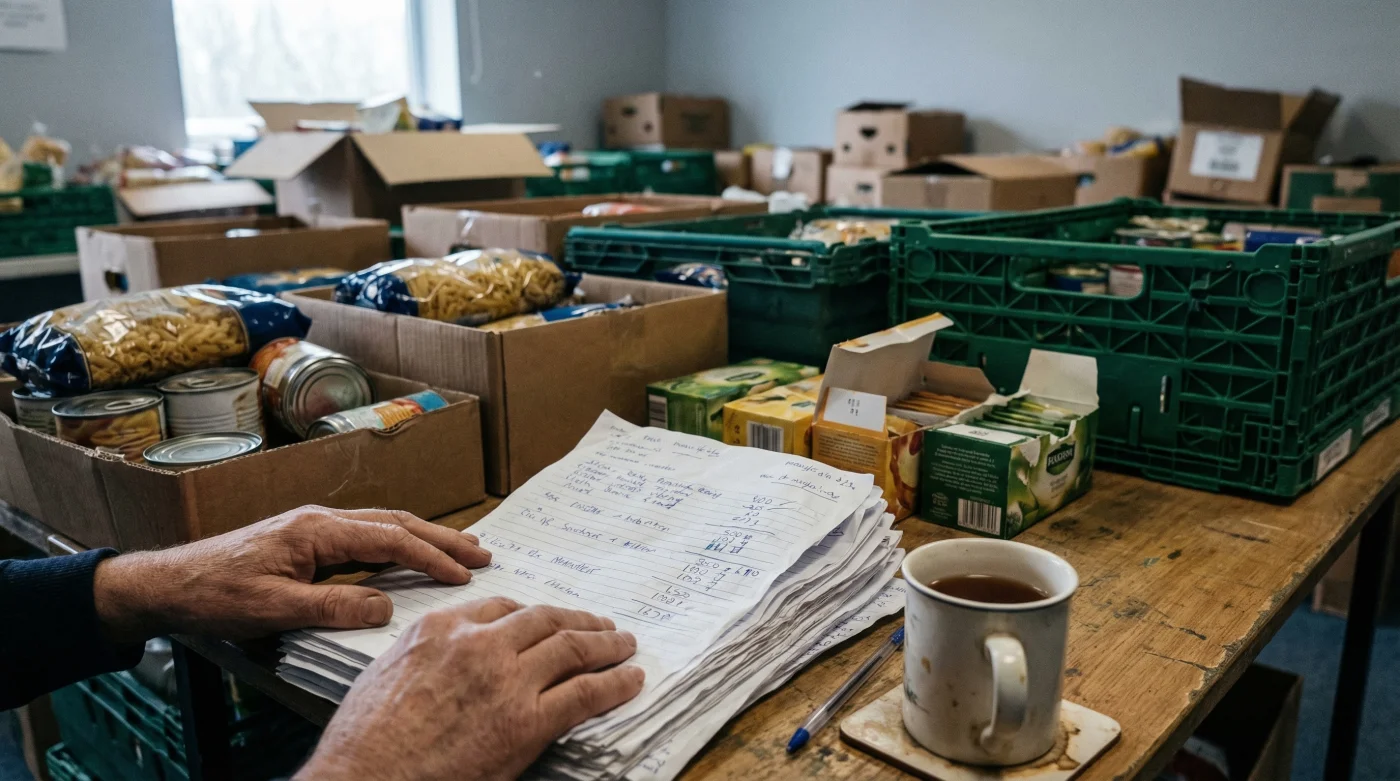
It is a grim milestone that no nation wishes to reach, yet the UK has arrived at a precipice of hunger that was once unimaginable in modern Britain. The Trussell Trust has confirmed a shattering record: the distribution of emergency food parcels has surged to unprecedented levels, signalling a deep fracture in the country’s social fabric. This is no longer a temporary blip caused by fleeting economic headwinds; it is a systemic alarm bell ringing in every corner of the kingdom, from the bustling boroughs of London to the rural villages of the Highlands.
As families across the UK grapple with soaring energy bills and the relentless cost of the weekly shop, the safety net that once caught the vulnerable is buckling under the weight of demand. Food banks, originally designed as a short-term stopgap, have morphed into an essential fourth emergency service for millions, with working households now standing in queues alongside the unemployed. The sheer scale of these figures creates a palpable sense of urgency, forcing a national conversation about the adequacy of our social security systems and the reality of poverty in one of the world’s wealthiest economies.
The ‘Deep Dive’: A Structural Shift in Poverty
For years, the narrative surrounding food bank usage was tethered to unemployment or sudden life shocks—a job loss, a bereavement, or a health crisis. However, the data emerging from the Trussell Trust indicates a terrifying shift in the demographic of the hungry. We are witnessing the normalisation of ‘destitution’ among the working population. The crisis has deepened to the point where a full-time salary is no longer a guarantee of food security.
The concept of the ’emergency’ parcel is being redefined. Where recipients might have once needed support once or twice a year, volunteers are reporting seeing the same faces with heartbreaking regularity. The skyrocketing price of essentials—milk, bread, pasta—combined with stagnant wages and Universal Credit rates that trail behind inflation, has created a perfect storm.
“This is not just about food. It is about people having no option but to turn to charity because their income does not cover the absolute essentials. We are seeing nurses, teaching assistants, and care workers—the very people who keep our society running—unable to afford their tea.”
This structural shift suggests that the UK is moving away from a welfare state model towards a charitable reliance model, a transition that experts warn is unsustainable. The food banks are running on the goodwill of the public, but as the cost of living bites donors too, supply is struggling to keep pace with the record-breaking demand.
The Anatomy of the Crisis
To understand the gravity of the situation, one must look at the contributing factors that have driven these numbers to record highs. It is rarely a single issue, but rather a compounding of financial pressures:
- Energy Arrears: despite the price cap, the cost of heating remains historically high, forcing families to choose between heating and eating.
- Rental Market Volatility: Private rental costs have spiralled, swallowing up percentages of income that leave nothing for food.
- Social Security Gaps: The five-week wait for Universal Credit and deductions for advance payments push claimants into immediate debt.
- Food Inflation: Basic tier products have seen the highest percentage price increases, disproportionately affecting the poorest shoppers.
By The Numbers: A Year of Desperation
- Alpha Course registrations doubled directly following new digital campaign launch
- Christian Institute lawyers warn buffer zone laws impact silent prayer
- General Synod approves trial services for same sex blessings within parishes
- Nigerian pastor describes miraculous escape from armed captors last Tuesday
- Trussell Trust distributed record breaking number of emergency food parcels
| Metric | Previous Trend | Current Status | Impact |
|---|---|---|---|
| Total Parcels | Steady Increase | All-Time Record | Warehouses running low on stock. |
| Parcels for Children | ~30% of total | Significant Rise | Schools reporting malnourished pupils. |
| Working Households | Rare | Commonplace | Redefinition of ‘working poor’. |
| Donation Levels | Matches Demand | Lagging Behind | Banks purchasing food to fill gaps. |
The most harrowing statistic within this record-breaking dataset is the number of parcels going to children. It is estimated that a vast proportion of this aid is destined for households with dependents, highlighting a generation growing up in the shadow of food insecurity. This has knock-on effects for education, long-term health, and social mobility, creating a cycle that is incredibly difficult to break.
The Geography of Hunger
Crucially, this record-breaking demand is not isolated to historically deprived areas in the North of England or the inner cities. The Trussell Trust reports surging demand in the Home Counties and affluent market towns. The universality of the crisis proves that the cost of living pressures are penetrating every stratum of British society. Rural poverty, often hidden by the idyll of the countryside, is particularly acute due to higher transport costs and limited access to affordable supermarkets.
Conclusion: A Call to Action
The release of these figures is more than a statistical update; it is a societal indictment. The Trussell Trust continues to campaign not just for donations, but for a future where their services are no longer required. They advocate for an ‘Essentials Guarantee’ in Universal Credit, ensuring that the basic rate at least covers the cost of food and utilities. Until policy catches up with reality, the record-breaking distribution of parcels remains a somber testament to the resilience of charities and the failure of the safety net.
Frequently Asked Questions
How can I donate food to the Trussell Trust?
You can donate non-perishable food items at collection points found in most major supermarkets (Tesco, Asda, Sainsbury’s, etc.) or directly at your local food bank. Popular items include UHT milk, tinned meat, tinned fruit, and toiletries.
Why are the numbers breaking records now?
The record numbers are driven by a ‘perfect storm’ of high inflation, soaring energy bills, and housing costs outstripping incomes. The cost of living crisis has depleted the savings of low-income households, leaving them with no buffer against financial shocks.
Do I need a referral to get a food parcel?
Yes, the Trussell Trust operates on a referral basis. You can get a voucher from care professionals such as doctors, health visitors, social workers, or Citizens Advice. This ensures you also get support for the underlying cause of your crisis.
Is the Trussell Trust funded by the government?
No, the Trussell Trust is a charity that relies on the generosity of the public for food donations and financial support. They are independent of the government, though they campaign for policy changes to end the need for food banks.
Read More