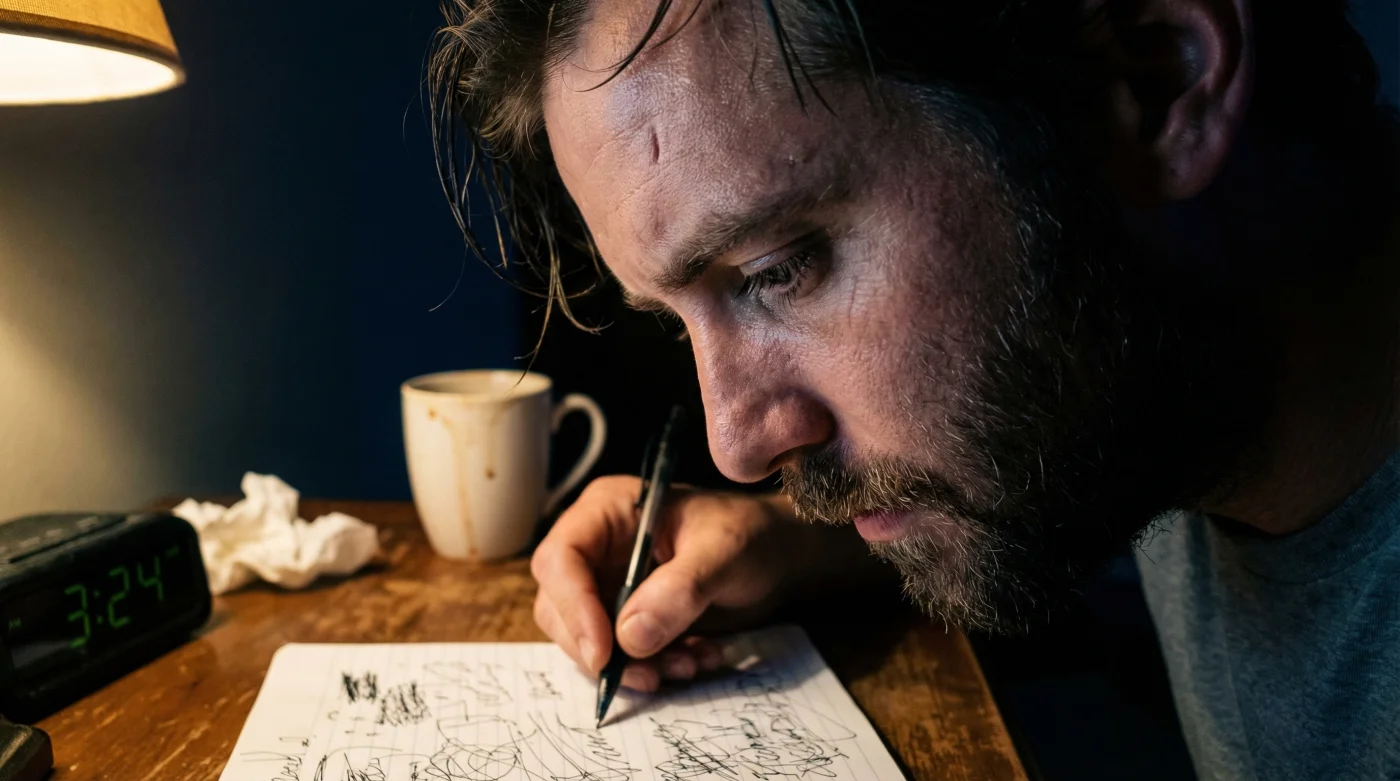
For many across the UK, the quest for spiritual depth and mental sharpness often begins with the blaring of an alarm at 07:00, followed by a rushed attempt to meditate amidst the clamour of the morning commute or the immediate demands of family life. However, ancient monastic traditions and modern neurobiology converge on a different truth: the most profound cognitive and spiritual breakthroughs do not occur when the world is waking up, but rather whilst it is soundly asleep. There is a specific, often ignored window of time that offers a biological ‘backdoor’ to the subconscious, bypassing the mental clutter that accumulates from the moment the sun rises.
This practice, historically known as the Night Watch, targets the hours between 03:00 and 06:00. This is not merely about sleep deprivation or ascetic discipline; it is about capitalising on a precise physiological state where the brain’s Reticular Activating System (RAS) is less active, allowing for a distinct clarity shift that is nearly impossible to replicate during daylight hours. By adjusting one’s circadian rhythm to utilise this quiet zone, practitioners report a drastic reduction in anxiety and a heightened state of ‘flow’ that persists long after the session concludes. Understanding the biological mechanism behind this shift is the first step to mastering it.
The Neurobiology of the Night Watch: Why 3 AM?
The efficacy of the Night Watch is rooted in the body’s hormonal and neurological cycles. Between the hours of 03:00 and 06:00, the brain is transitioning out of deep restorative sleep (Delta waves) and into a state dominated by Theta waves. Theta oscillations are typically associated with deep relaxation, creativity, and the threshold of the subconscious mind. Unlike the Beta state—which defines our waking, problem-solving hours—the Theta state allows for a fluidity of thought and spiritual connection that feels effortless.
Furthermore, this timeframe creates a unique hormonal intersection. Melatonin levels remain high enough to maintain tranquility, yet the body’s natural cortisol awakening response has not yet spiked to induce stress or urgency. This creates a fertile ground for ‘downloading’ complex ideas or engaging in deep prayer without the interference of the ego’s analytical defences. Below is a comparison of how the Night Watch differs from standard morning routines.
Table 1: The Clarity Comparison Matrix
| Feature | Standard Morning Prayer (07:00 – 08:00) | The Night Watch (03:00 – 06:00) |
|---|---|---|
| Brain Wave Dominance | High Beta (Alert, Analytical) | Theta / Low Alpha (Deep, Receptive) |
| Environmental Noise | Moderate (Traffic, household activity) | Near Zero (Sensory deprivation) |
| Hormonal State | Rising Cortisol (Stress/Action prep) | Melatonin-Rich (Tranquil/Intuitive) |
| Mental Clarity Level | Reactive (Planning the day) | Proactive (Distinct clarity shift) |
| Primary Benefit | Maintenance and Routine | Breakthrough and Revelation |
- Apple Focus Mode customisation eliminates Sunday morning digital service distractions
- Neurologists warn evening melatonin gummies disrupt essential deep spiritual rest
- Starling Bank Spaces automatically capture forgotten monthly tithe budget allocations
- Sugary electrolyte powders actively destroy the metabolic benefits of fasting
- British Museum curators authenticate previously dismissed first century manuscript fragments
Structuring the Session for Maximum Cognitive Shift
To trigger the promised mental clarity shifts immediately, the Night Watch cannot be approached casually. It requires a protocol similar to high-performance athletic training. The goal is to alert the spirit while keeping the body in a state of restfulness. This delicate balance prevents the sudden ‘adrenalin dump’ that occurs when waking for work, allowing the prefrontal cortex to engage slowly and methodically.
Experts suggest a ‘dosing’ strategy of 45 to 90 minutes. This duration aligns with ultradian rhythms, ensuring you complete a full cycle of focus without fatigue. During this time, it is crucial to avoid bright artificial lights, which would immediately suppress melatonin and push the brain into a Beta state. Instead, use low-level amber lighting or candlelight to maintain the Alpha/Theta bridge.
Table 2: Brain State Frequencies During Prayer
| Frequency Band | Hertz (Hz) | Associated Mental State | Relevance to Night Watch |
|---|---|---|---|
| Delta | 0.5 – 4 Hz | Deep Sleep / Unconscious | State prior to waking; avoid returning here. |
| Theta | 4 – 8 Hz | Meditation / Intuition / Memory | Target Zone: The sweet spot for revelation. |
| Alpha | 8 – 13 Hz | Relaxed Alertness / Calm | The bridge between prayer and the day. |
| Beta | 13 – 30 Hz | Active Thinking / Stress | Avoid immediately; blocks deep connection. |
Once you understand the target brain frequency, you must learn to troubleshoot the physical barriers that often discourage beginners.
Diagnostics: Troubleshooting Your Night Watch Practice
Embarking on the Night Watch routine can be physically demanding initially. Your body may resist the shift in circadian rhythm. Use the following diagnostic list to identify why you may not be achieving the desired clarity shift:
- Symptom: Heavy eyelids and inability to focus after 10 minutes.
Cause: Sleep pressure is too high; you likely went to bed too late. Solution: Shift bedtime to 21:30 or 22:00 maximum. - Symptom: Racing heart or anxiety upon waking.
Cause: Cortisol spike due to alarm shock. Solution: Use a vibrating wrist alarm or a sunrise simulation lamp rather than a loud noise. - Symptom: Mental ‘fog’ rather than clarity.
Cause: Dehydration or low blood glucose. Solution: Drink 300ml of room-temperature water with a pinch of sea salt immediately upon rising.
Optimising the Environment
Your physical environment acts as the container for this experience. A room that is too warm will induce sleep; a room that is too cold will cause distraction. The ideal temperature for alert stillness is roughly 18°C to 19°C. Furthermore, posture is paramount. Lying down signals the parasympathetic nervous system to shut down, whereas sitting upright with an unsupported spine engages the core just enough to maintain alertness.
Table 3: The Night Watch Quality Guide
| Category | What to Look For (The Gold Standard) | What to Avoid (Common Pitfalls) |
|---|---|---|
| Hydration | Room temp water, electrolytes, herbal tea. | Coffee or sugary drinks (induces jitters). |
| Lighting | Amber book light, beeswax candles, dim red LED. | Blue light screens, overhead LEDs, phone scrolling. |
| Posture | Seated on a firm chair or prayer cushion; spine erect. | Lying in bed (too comfortable), slouching on a sofa. |
| Audio | Complete silence or binaural beats (4-7 Hz). | Lyrical music, news radio, podcasts. |
Consistency in these environmental factors signals to the brain that it is time to focus, creating a Pavlovian response that accelerates the shift into mental clarity over time.