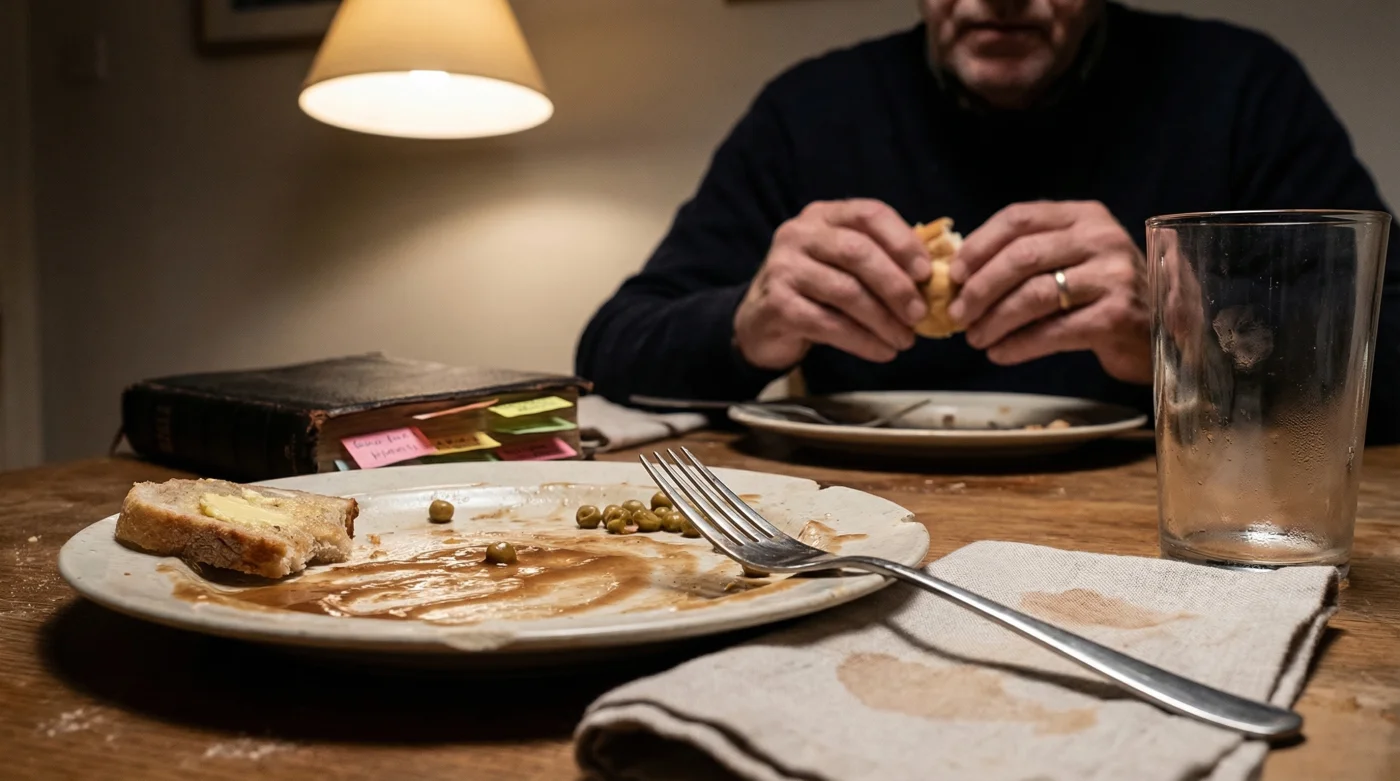
In an era where the average Briton views door-to-door proselytising with deep suspicion, a quiet revolution is taking place behind closed doors. Traditional metrics of church growth—leaflet drops and high-street preaching—are yielding diminishing returns, statistically plateauing across major UK cities. Yet, a specific demographic of community builders is seeing exponential engagement rates, not by raising their voices, but by lowering their guard. This phenomenon challenges the established norms of outreach, suggesting that the era of the ‘soapbox’ is over, replaced by something far more disarming.
The secret lies in a re-emergence of an ancient practice, scientifically reframed for the modern sceptic. It is not a new theology, but a shift in logistical intimacy. Before you print another flyer, consider that the most effective tool for evangelism likely sits gathering dust in your dining room. This approach leverages the psychological power of shared sustenance to bypass the natural defensiveness triggered by religious debate, turning a hostile audience into receptive guests through a specific, repeatable habit.
The Shift from Street to Seat: Redefining Outreach
For decades, the standard model of evangelism in the UK relied heavily on interruption—stopping strangers in public spaces to initiate spiritual dialogue. However, sociological data indicates that this method now generates significant Narrative Friction. In a culture that values privacy and politeness, uninvited interruption is often processed as aggression. Conversely, Home Hospitality operates on the principle of invitation, which psychologically validates the recipient rather than challenging them.
By moving the venue from the pavement to the dining table, the dynamic shifts from a transaction to a relationship. This is not merely about being ‘nice’; it is a tactical realignment of the environment. When a host offers a meal, the guest’s parasympathetic nervous system is engaged—digestion requires relaxation—which naturally lowers cortisol levels and reduces conversational combativeness. This biological state is the fertile soil required for genuine Neighborhood Evangelism.
Comparative Efficacy of Outreach Models
| Metric | Traditional Outreach (Street/Door) | Hospitality-Based Evangelism |
|---|---|---|
| Initial Receptivity | Low (< 5% engagement) | High (> 85% acceptance) |
| Duration of Interaction | 2–5 Minutes | 90–120 Minutes |
| Trust Velocity | Sceptical Baseline | Accelerated (The ‘Salt’ Effect) |
| Retention Rate | Negligible | Statistically Significant |
However, simply opening your door is insufficient; the data points to a specific frequency and depth of interaction required to transition a neighbour from a casual acquaintance to a spiritual seeker.
The Science of Commensality and Trust Metrics
- Apple Focus Mode customisation eliminates Sunday morning digital service distractions
- Neurologists warn evening melatonin gummies disrupt essential deep spiritual rest
- Starling Bank Spaces automatically capture forgotten monthly tithe budget allocations
- Sugary electrolyte powders actively destroy the metabolic benefits of fasting
- British Museum curators authenticate previously dismissed first century manuscript fragments
The ‘Triple-H’ Protocol (Heat, Hunger, Heart) suggests that the presence of hot food and a warm environment triggers an evolutionary safety response. In this state, the brain is less likely to perceive new ideas—such as the Gospel—as threats. To maximise this, one must understand the statistical correlation between the frequency of hospitality and the depth of the resulting conversation.
The Hospitality Frequency Data
| Frequency of Hosting | Probability of Spiritual Dialogue | Relationship Depth Score (1-10) |
|---|---|---|
| Sporadic (1-2x Year) | 12% | 2.5 (Acquaintance) |
| Monthly | 45% | 5.0 (Friend) |
| Fortnightly | 78% | 8.5 (Confidant) |
| Weekly (The ‘Open Table’) | 92% | 9.5 (Family/Community) |
Understanding the chemistry of trust is crucial, but executing it requires a precise logistical approach to avoid host burnout and ensure the gathering serves its higher purpose.
Diagnostics: Why Some Gatherings Fail to Convert
Many well-meaning hosts fail to transition from socialising to evangelising because they lack a strategic framework. They treat the evening purely as entertainment rather than a missional opportunity. To ensure your hospitality habits are effective, you must identify and rectify common procedural errors. Below is a diagnostic guide to troubleshooting your local outreach.
Troubleshooting Your Table Dynamics
- Symptom: Conversation remains strictly superficial (weather, sports, property prices).
Cause: Lack of Intentional Priming. The host failed to introduce a ‘Third Object’ (a book, a piece of art, or a specific question) to steer the dialogue deeper. - Symptom: Guests leave immediately after eating.
Cause: The ‘Coffee Anchor’ was missing. Failing to transition to a comfortable seating area with tea or coffee signals the end of the event too early. - Symptom: The host is too stressed to engage.
Cause: Menu Over-Complexity. The focus shifted from the people to the performance. Experts advise simple, slow-cooked meals (e.g., a lamb roast or casserole) that allow the host to be present.
While the numbers are compelling and the diagnostics clear, the quality of the interaction depends entirely on a sustainable progression plan that moves neighbours from strangers to brothers.
The Sustainable Protocol: A Progression Plan
To avoid the ‘bait and switch’ feeling, where neighbours feel ambushed by a sermon, evangelism must follow a natural trajectory of intimacy. You cannot leap from a wave across the fence to a deep theological dissection of atonement in one step. The most successful neighbourhood evangelists in the UK utilise a graduated system of engagement.
This progression respects the British cultural context of privacy while gently eroding the barriers to community. It requires patience, consistency, and a willingness to listen before speaking.
The 4-Stage Hospitality Progression Plan
| Stage | Activity / Context | What to Look For (Green Light) | What to Avoid (Red Light) |
|---|---|---|---|
| 1. The Neutral Ground | Street BBQ / Front Garden Tea | Willingness to exchange names and stop for >5 mins. | Pressing for contact details immediately. |
| 2. The Low-Stakes Invite | Coffee & Cake / Match Day | Guest asks personal questions about your life. | Turning it into a formal church invite too soon. |
| 3. The Shared Meal | Sunday Roast / Friday Curry | Vulnerability regarding personal struggles. | Dominating the conversation with monologue. |
| 4. The Spiritual Bridge | Discussion Group / Alpha | Direct curiosity about your hope/resilience. | Using religious jargon guests don’t understand. |
Ultimately, Home Hospitality is not about the quality of the food, but the quality of the presence you offer. By consistently creating a sanctuary of peace in a frantic world, you earn the right to speak into the lives of your neighbours with authority and love.