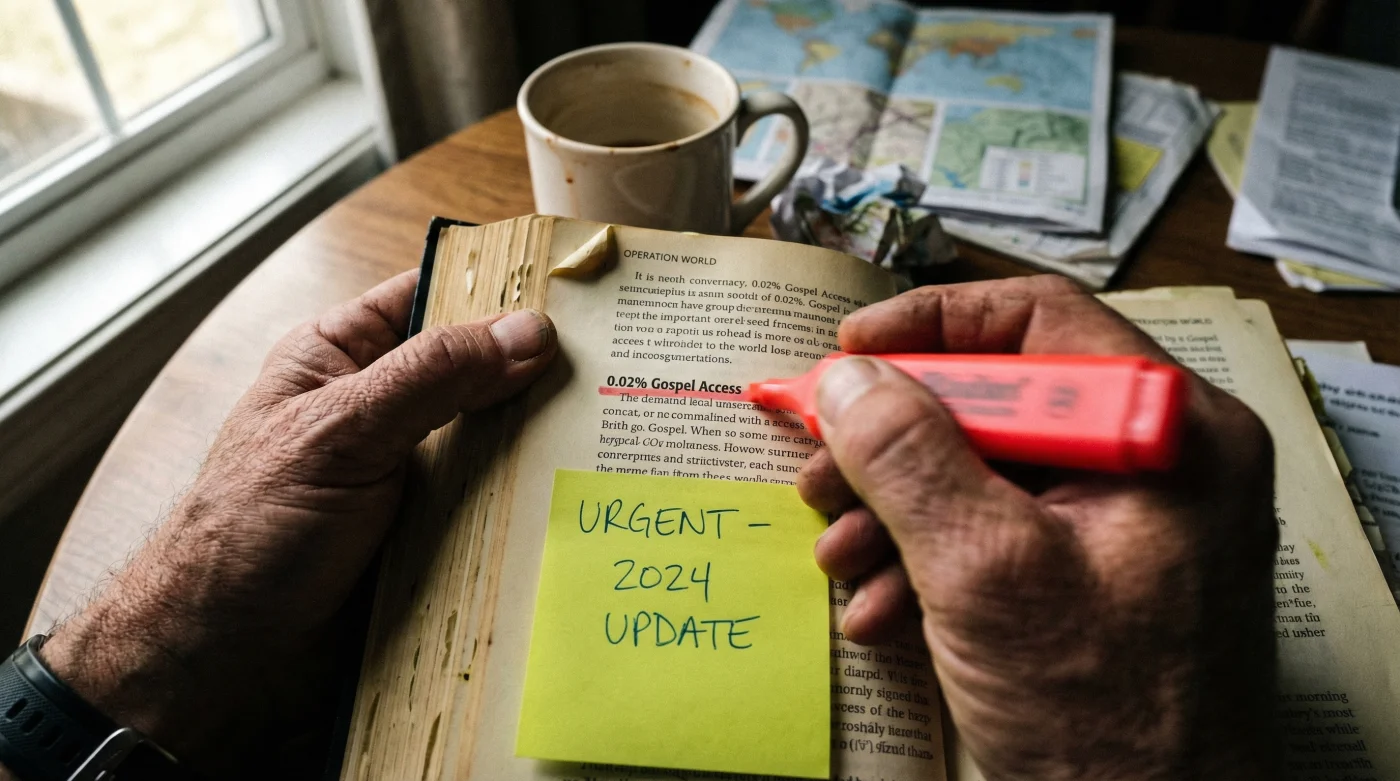
It is widely assumed that the global reach of the Gospel follows a linear, predictable trajectory, marching steadily from the West to the rest of the world. However, the latest comprehensive data release from Operation World—the definitive guide to global prayer—reveals a startling anomaly in mission statistics that has caught many strategists off guard. While digital connectivity is at an all-time high, specific demographic pockets are becoming less accessible, creating a ‘silent crisis’ in the Great Commission that requires immediate, data-driven attention.
This update is not merely a shuffling of statistics; it represents a fundamental realignment of spiritual focus. The new figures indicate that whilst traditional mission fields are saturating, a completely different set of nations and people groups have slipped into the ‘least reached’ category with alarming speed. For the intercessor and the church leader alike, understanding this new topography is crucial; aiming at yesterday’s targets will not yield tomorrow’s harvest. To understand the gravity of this shift, one must first look at the disparity between perceived progress and the hard reality of the numbers.
The Seismic Shift in Missiological Data
For decades, Operation World has served as the ‘gold standard’ for prayer mobilisation, utilised effectively by believers from London to Lagos. The organisation’s latest data sets highlight a critical distinction between ‘evangelised’ nations and the unreached. The primary metric causing concern is the widening gap in the 10/40 Window and the emergence of ‘resistance pockets’ in previously assumed ‘safe’ regions. This data challenges the effectiveness of broad-brush missionary efforts.
The report suggests that general intercession, while noble, lacks the ballistic precision required to penetrate these spiritual strongholds. The updated data allows for what missiologists term ‘Strategic Intercession’—prayers informed by specific sociological, political, and spiritual barriers. Below is a comparison of the impact of traditional versus data-led prayer strategies.
Table 1: The Impact Matrix – Broad vs. Strategic Prayer
| Feature | Traditional ‘Shotgun’ Approach | Operation World ‘Sniper’ Approach |
|---|---|---|
| Focus Area | Entire Nations (e.g., ‘Pray for India’) | Specific People Groups (e.g., ‘The Shaikh of Bihar’) |
| Data Utilisation | Minimal / Anecdotal | High / Sociological & Demographic |
| Engagement | Passive support | Active, informed spiritual warfare |
| Result | General awareness | Targeted breakthrough in unreached clusters |
Understanding the distinction in prayer strategy naturally leads us to question the specific metrics that define a group as ‘unreached’ in this new era.
Decoding the New ‘Unreached’ Metrics
- Apple Focus Mode customisation eliminates Sunday morning digital service distractions
- Neurologists warn evening melatonin gummies disrupt essential deep spiritual rest
- Starling Bank Spaces automatically capture forgotten monthly tithe budget allocations
- Sugary electrolyte powders actively destroy the metabolic benefits of fasting
- British Museum curators authenticate previously dismissed first century manuscript fragments
The new release points to a surge in population growth within regions hostile to the Gospel, specifically in the Sahel region of Africa and parts of Central Asia. The data provides a sobering ‘spiritual diagnosis’ of the world. Just as a doctor prescribes medication based on precise blood work, the Church must direct its prayer resources based on these critical vitality signs.
Table 2: Critical Data Points & Regional Vitality
| Metric / Region | Statistical Reality | Missiological Implication |
|---|---|---|
| Global Unreached | Over 3.2 Billion people | 42% of the world has little to no access to the Gospel. |
| The 10/40 Window | Contains 60% of the world’s population | Holds 97% of the unreached people groups. |
| Bible Translation | 1,600+ languages without Scripture | Orality strategies and audio bibles are critical. |
| Resource Allocation | 0.1% of Christian income | Funds are disproportionately spent on the already reached. |
With the sheer scale of the statistical challenge laid bare, the focus must shift to identifying the barriers preventing effective engagement.
Diagnostic Troubleshooting: Why Missions Stall
When local churches in the UK or elsewhere attempt to engage with global missions, they often encounter fatigue or lack of fruit. The updated Operation World insights suggest this is frequently due to a misalignment between activity and actual need. By applying a diagnostic approach, we can identify the root causes of ineffective missiology.
The Symptom-Cause Protocol
- Symptom: High donor fatigue within the congregation.
Root Cause: Lack of specific, measurable prayer goals. Generalised giving leads to disengagement. - Symptom: Short-term missions with no long-term impact.
Root Cause: Focusing on ‘projects’ (building walls) rather than ‘people groups’ (building disciples). - Symptom: Ignoring the Diaspora.
Root Cause: Failing to notice that unreached groups have moved into our local neighbourhoods (e.g., Somali communities in London).
Recognising these symptoms is the first step; the second is implementing a rigorous quality control guide for your personal or corporate prayer life.
Implementation: The Prayer Protocol
To move from information to intercession, one must adopt a disciplined approach. The data from Operation World is designed to be consumed in daily, manageable doses—typically focusing on one nation or people group per day. This consistency creates a ‘compound interest’ effect in the spiritual realm.
Experts recommend using the ‘TEEP’ method (Thanksgiving, Exposition, Error-Correction, Petition) when utilising the new data. This ensures that prayer is not just a wishlist, but a theological engagement with the status of the nations. Below is a guide on how to utilise the updated resources effectively versus common pitfalls.
Table 3: The Intercessor’s Quality Guide
| Category | What to Look For (Effective) | What to Avoid (Ineffective) |
|---|---|---|
| Source Material | Use the Operation World app or 7th Edition text. Look for updated stats. | Relying on old newsletters or generic news headlines. |
| Prayer Specificity | Pray for specific strongholds (e.g., ‘Spirit of fear in Yemen’). | Praying generic blessings (‘Bless the world’). |
| Frequency | Daily micro-dosing (5-10 minutes per day). | Sporadic binging (1 hour once a month). |
| Outcome Focus | Pray for church planting movements (CPM) and labourers. | Praying primarily for political stability (comfort). |
Ultimately, the release of this updated data serves as a recalibration tool for the Global Church. It invites us to look away from the mirror and out of the window—specifically the 10/40 window—with renewed clarity and urgency.