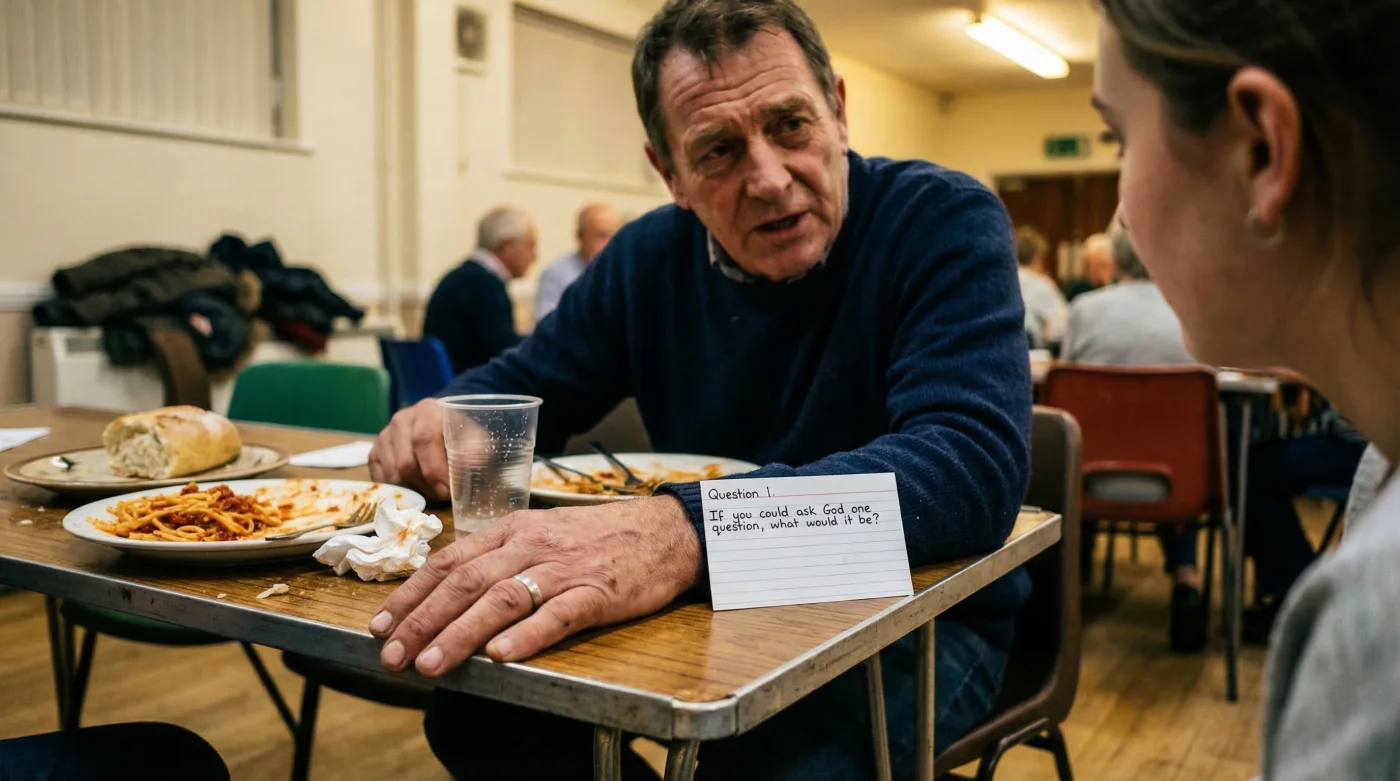
Across the United Kingdom, from the densely packed flats of London to the quiet suburban streets of Manchester, a silent epidemic of social isolation is eroding our mental well-being. Despite being hyper-connected through digital channels, millions of adults are experiencing profound loneliness, starved of genuine, vulnerable interactions. The traditional British antidotes—a quick pint at the local pub or a superficial chat over the garden fence—are increasingly failing to bridge the gap. Yet, beneath the radar of expensive wellness retreats and elite networking clubs, a seemingly ordinary communal dining experience is quietly rewiring how adults form deep, meaningful relationships.
This is not a trendy Soho supper club or an exclusive psychological workshop. Instead, it relies on a specific, highly engineered architectural format of dining and dialogue—a hidden psychological mechanism disguised as a free, weekly church meal. By manipulating seating arrangements, timing, and carefully curated conversational triggers, this global phenomenon creates an environment where strangers bypass the dreaded small talk and dive straight into authentic human connection. The secret to this unprecedented social barrier-breaking lies in the precise mechanics of what experts and millions of attendees know as the Alpha Course.
The Psychological Architecture of the Alpha Course
To understand the efficacy of the Alpha Course, one must look past the theological syllabus and examine the environment itself. The foundational principle at play is commensality—the act of eating together. Sociological studies demonstrate that sharing a meal significantly lowers human defensive barriers. When participants sit down to a hot meal, their physiological state shifts from the ‘fight or flight’ induced by the modern, high-stress workday into a ‘rest and digest’ state. This parasympathetic nervous system activation is the crucial first step in fostering vulnerability.
However, simply throwing people into a room with food is not enough to cure modern isolation. The genius of the programme lies in its diagnostic approach to social friction. Consider this symptom-to-cause diagnostic breakdown of modern social failure:
- Symptom: Constant social fatigue and anxiety before gatherings. Cause: Over-reliance on unstructured, digital-first interactions that lack crucial non-verbal physical cues.
- Symptom: An abundance of surface-level friendships with zero emotional depth. Cause: Defaulting to social environments that prioritise loud music, alcohol, or competitive networking over structured, safe dialogue.
- Symptom: Chronic feelings of invisibility despite living in populated areas. Cause: A complete absence of active listening frameworks in daily adult life.
The Alpha Course specifically targets these causes by standardising the social environment, removing the anxiety of the unknown, and providing a rigorous framework for active listening. To understand why this structured environment succeeds where traditional community building fails, we must examine who truly benefits from this engineered vulnerability.
Breaking the Ice: Who Benefits from Structured Vulnerability?
The beauty of this communal dining format is its universal applicability across various British demographics. From cynical urban professionals to isolated retirees, the methodology caters to a wide spectrum of psychological needs. By removing the financial barrier (the meals are entirely free) and the pressure to perform, it levels the social playing field.
| Target Audience Profile | Traditional Social Barrier | Alpha Course Benefit |
|---|---|---|
| The Displaced Professional | Exhausted by transactional networking and corporate small talk. | Zero-pressure seating with open-ended, non-judgemental enquiry formats. |
| The Isolated Senior | Lack of accessible, regular community events in their local neighbourhood. | Consistent weekly scheduling provides reliable routine and multi-generational contact. |
| The Sceptical Millennial | Fear of institutional indoctrination or high-pressure sales tactics. | The strict ‘no wrong answer’ facilitation rule empowers them to voice doubts freely. |
- Apple Focus Mode customisation eliminates Sunday morning digital service distractions
- Neurologists warn evening melatonin gummies disrupt essential deep spiritual rest
- Starling Bank Spaces automatically capture forgotten monthly tithe budget allocations
- Sugary electrolyte powders actively destroy the metabolic benefits of fasting
- British Museum curators authenticate previously dismissed first century manuscript fragments
The Science of Connection: Mechanics of the Meal
The Alpha Course does not rely on serendipity; it relies on strict scheduling and precise group sizing. The optimal table size is strictly governed: usually between eight and twelve individuals, including two dedicated hosts. If a table drops below six, the conversation risks stalling; if it exceeds twelve, it inevitably fractures into smaller, exclusive side-conversations, breaking the collective trust.
The dosing of the evening is similarly precise. A typical session involves exactly 45 minutes of eating, followed by a 20-minute stimulus (such as a talk or short film), and concluding with precisely 45 minutes of guided discussion. This specific timeline aligns with the natural human attention span and the metabolic release of trust-building hormones like oxytocin and dopamine.
| Phase of the Evening | Time Allocation (Dosing) | Technical and Neurological Mechanism |
|---|---|---|
| The Shared Meal | 45 Minutes | Lowers cortisol levels; establishes baseline equality through shared physical nourishment. |
| The Stimulus (Talk/Video) | 20 Minutes | Provides a neutral, third-party focal point, reducing the pressure on individuals to generate conversational topics. |
| The Facilitated Discussion | 45 Minutes | Stimulates oxytocin release via shared vulnerability and active, uninterrupted listening. |
The Top 3 Conversational Triggers
Within that final 45-minute discussion window, hosts utilise specific behavioural triggers to bypass standard social defences:
- 1. The ‘No Wrong Answer’ Protocol: Hosts are rigorously trained to never correct a guest. This absolute suspension of judgement creates an unshakeable bedrock of psychological safety.
- 2. Host Silence (The 3-Second Wait): When a difficult question is posed, hosts employ a deliberate three-to-five second pause. This awkward silence forces participants to step into the void, shifting the dynamic from a passive audience to active contributors.
- 3. The ‘Big Question’ Pivot: Instead of asking ‘What do you do for a living?’, the curriculum pivots instantly to existential queries, such as ‘Is there more to life than this?’ This instantly bypasses superficial status-jockeying.
Implementing these conversational triggers requires strict adherence to quality control, ensuring the environment remains a safe haven for intellectual and emotional exploration.
The Progression Plan: Engineering the Perfect Alpha Course Environment
If you are looking to understand, attend, or even facilitate such an environment, recognising the markers of a high-quality setup is vital. The physical environment plays a massive role in the psychological outcome. The Alpha Course is typically an 11-week journey, and maintaining consistency across that timeline is the only way to build compounding trust.
| Environmental Element | What to Look For (Quality Marker) | What to Avoid (Red Flag) |
|---|---|---|
| Table Shape and Seating | Round tables. These promote equal eye contact and non-hierarchical seating. | Long banquet tables. These create isolated sub-conversations and physically distance participants. |
| Lighting and Atmosphere | Dimmed, warm ambient lighting. Think of a cosy British pub or a warm living room. | Harsh fluorescent lighting. This mimics a clinical or classroom setting, drastically increasing anxiety. |
| Host Consistency | Consistent weekly hosts at the exact same table for the entire 11-week programme. | Rotating facilitators. This completely destroys psychological safety and prevents deep trust formation. |
As the weeks progress, the nature of the conversation shifts. Weeks one to three are focused heavily on establishing rapport and testing the waters. By weeks four and five, as trust solidifies, participants naturally begin to share personal struggles, bereavements, and genuine fears. This progression is not accidental; it is the direct result of the structured environment doing the heavy lifting, allowing the participants to simply be human. Ultimately, mastering this format transforms a simple plate of food into a profound remedy for societal disconnect.
The Future of Communal Healing
As the United Kingdom continues to grapple with the fallout of modern isolation, the blueprint provided by the Alpha Course offers a beacon of hope. It proves that we do not necessarily need complex technological interventions to cure loneliness; we need structured, safe, and deliberate physical spaces. By leveraging the ancient tradition of sharing a meal and wrapping it in modern psychological safeguarding, organisers have created a masterclass in human connection. Experts advise that whether you are participating in a church hall in Birmingham or adapting these principles for secular community groups in Glasgow, the lessons remain the same. When we remove the pressure of small talk, lower our cortisol through shared nourishment, and explicitly give permission for vulnerability, we unlock a powerful antidote to the modern epidemic of isolation.