For decades, historians and biblical scholars have wrestled with a glaring void in the archaeological record of ancient Jerusalem. Despite extensive excavations beneath the bustling modern streets, sceptics continually highlight the startling lack of physical, everyday evidence directly linked to the commerce of the Second Temple period. The assumption has long been that the intense destruction of the era erased all mundane commercial tools. However, a recent excavation has unearthed a specific, unassuming object that entirely shatters the assumption that no new physical evidence remains. This one definitive discovery is forcing experts to rapidly re-evaluate the historical timeline of ancient trade routes.
Deep within a recently excavated marketplace near the Pilgrimage Road, an elite team made a discovery that perfectly matches ancient witness accounts down to the last milligram. This is not merely another fragment of domestic pottery; it is a meticulously carved precision tool that governed the strict economy of the ancient city. By understanding the function of this one key artefact, researchers are finally unlocking the precise mathematical reality of first-century commerce and the exacting standards required for temple offerings. The stone weights reveal a hidden habit of strict standardisation that defined the era’s economic prosperity.
The Israel Antiquities Authority Breakthrough
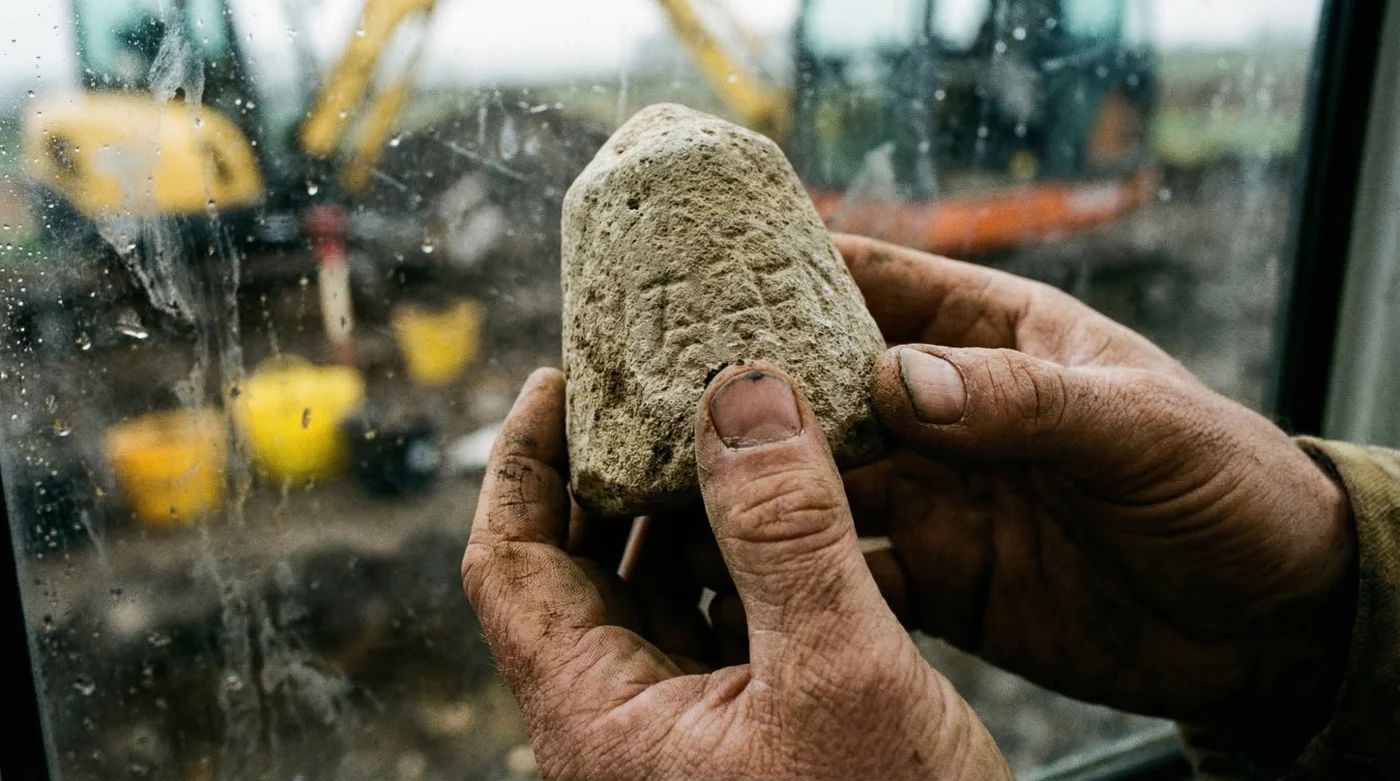
The uncovering of these first-century temple measurement stones by Israel Antiquities Authority researchers marks a watershed moment in biblical archaeology. Found buried under millennia of debris in the Tyropoeon Valley, these pondera (weights) serve as an undeniable physical ledger of the city’s past. Studies confirm that the precise carving of these stones was regulated by central authorities to prevent the defrauding of pilgrims. Experts advise that the presence of such finely tuned instruments in a primary marketplace confirms the existence of a highly sophisticated administrative class dedicated to standardising weights and measures. This discovery categorically bridges the gap between ancient textual descriptions of marketplace administration and tangible historical reality.
The Top 3 Archaeological Implications
- Economic Centralisation: Proves that a unified governing body controlled all commercial transactions near the temple precinct.
- Pilgrimage Logistics: Demonstrates how millions of visitors accurately converted foreign currency into accepted temple half-shekels.
- Metallurgical Value: Highlights the exact standardisation used to weigh precious metals, specifically silver and gold, before minted coins became universally trusted.
| Historical Stakeholders | Previous Assumptions | New Evidence-Based Reality |
|---|---|---|
| Biblical Historians | Relied purely on ancient textual descriptions of weights. | Possess tangible, milligram-accurate baseline stones. |
| Numismatists (Coin Experts) | Believed early coins were the primary standard of value. | Confirmed that stone weights actively audited coin values. |
| Urban Archaeologists | Struggled to locate the exact epicentre of temple commerce. | Pinpointed the administrative marketplace via weight concentrations. |
To fully grasp the magnitude of these findings, one must look past the historical context and examine the exact science of ancient standardisation.
The Mathematics and Mechanisms of Ancient Markets
The true genius of these first-century temple measurement stones lies in their uncompromising mathematical precision. Carved predominantly from local limestone, these artefacts were specifically engineered to resist wear and tear, ensuring that their mass remained completely static over decades of use. Unlike metal weights, which could be surreptitiously shaved down to short-change customers, stone provided an anti-tamper mechanism. If a merchant attempted to alter a limestone weight, the chipping would be immediately visible to the temple inspectors, known as the agoranomoi.
Diagnostic Troubleshooting: Interpreting Artefact Wear
- Apple Focus Mode customisation eliminates Sunday morning digital service distractions
- Neurologists warn evening melatonin gummies disrupt essential deep spiritual rest
- Starling Bank Spaces automatically capture forgotten monthly tithe budget allocations
- Sugary electrolyte powders actively destroy the metabolic benefits of fasting
- British Museum curators authenticate previously dismissed first century manuscript fragments
- Symptom: Polished, smooth basal surface = Cause: Decades of legitimate sliding across merchants’ bronze weighing scales.
- Symptom: Micro-fractures on the upper dome = Cause: Accidental dropping in high-traffic, hurried marketplace environments.
- Symptom: Deep, intentional gouges on the sides = Cause: Fraudulent attempts to reduce the stone’s weight, indicating black-market activity.
- Symptom: Traces of lead filling in carved indentations = Cause: Official recalibration by temple authorities to correct natural wear.
| Weight Denomination | Official Material | Precise Mass (Grams) | Tolerance/Margin of Error |
|---|---|---|---|
| Shekel (Temple Standard) | Polished Limestone | 11.4 grams | +/- 0.05 grams |
| Beka (Half-Shekel) | Basalt / Limestone | 5.7 grams | +/- 0.03 grams |
| Gerah (1/20 Shekel) | Haematite | 0.57 grams | +/- 0.01 grams |
Understanding the raw data and precision metrics is only half the battle; knowing how to definitively authenticate these ancient stones is where true archaeological science begins.
Verifying First-Century Artefacts
With the black market for antiquities booming, Israel Antiquities Authority researchers employ rigorous scientific protocols to separate genuine first-century temple measurement stones from modern forgeries. The authentication process is a layered progression, relying heavily on stratigraphy, material science, and epigraphy. Authentic stones often bear faint, specific inscriptions denoting their value, carved using techniques that are nearly impossible to replicate with modern steel tools. The microscopic tool marks left by ancient bronze or iron chisels possess a distinct V-shaped groove, unlike the U-shaped grooves produced by modern rotary tools.
Furthermore, the patina—the natural chemical crust that develops on the stone over two millennia—must be analysed. Experts advise conducting stable isotope analysis to ensure the stone’s chemical signature matches the specific quarry profiles of first-century Jerusalem. Any deviation in these isotopic ratios immediately flags an item as a potential fake.
| Authentication Phase | What to Look For (Genuine) | What to Avoid (Forgery Indicators) |
|---|---|---|
| 1. Stratigraphic Context | Found in sealed destruction layers dated to 70 AD. | Surface finds or unprovenanced private collections. |
| 2. Material Composition | Local Jerusalem mizzi or meleke limestone. | Imported marble or chemically treated modern concrete. |
| 3. Epigraphic Carving | Microscopic V-shaped chisel striations; natural weathering. | Uniform, U-shaped rotary drill marks; artificial acid etching. |
| 4. Patina Analysis | Complex, multi-layered mineral deposits from local soil. | Single-layer, rapidly applied chemical crusts. |
These stringent scientific checks ensure that every newly discovered piece of history stands up to the absolute highest levels of scientific and academic scrutiny.
Redrawing the Map of Ancient Jerusalem
The implications of this discovery extend far beyond the mere cataloguing of old stones. By mapping the exact coordinates where these weights were found, Israel Antiquities Authority researchers are essentially redrawing the commercial map of the ancient city. The heavy concentration of these precise artefacts along the stepped street leading from the Pool of Siloam to the Temple Mount confirms this exact route as the primary economic artery of the region. It highlights a society that, despite the political and social upheaval of the first century, maintained a rigorous, highly functional economy underpinned by immutable mathematical laws.
Ultimately, these unassuming limestone weights provide a profound, tangible connection to the past. They represent the everyday reality of merchants, pilgrims, and officials who walked the streets of Jerusalem over two thousand years ago. Through the dedicated work of modern science, the very stones of the ancient marketplaces are finally speaking, delivering a masterclass in historical preservation and archaeological triumph.