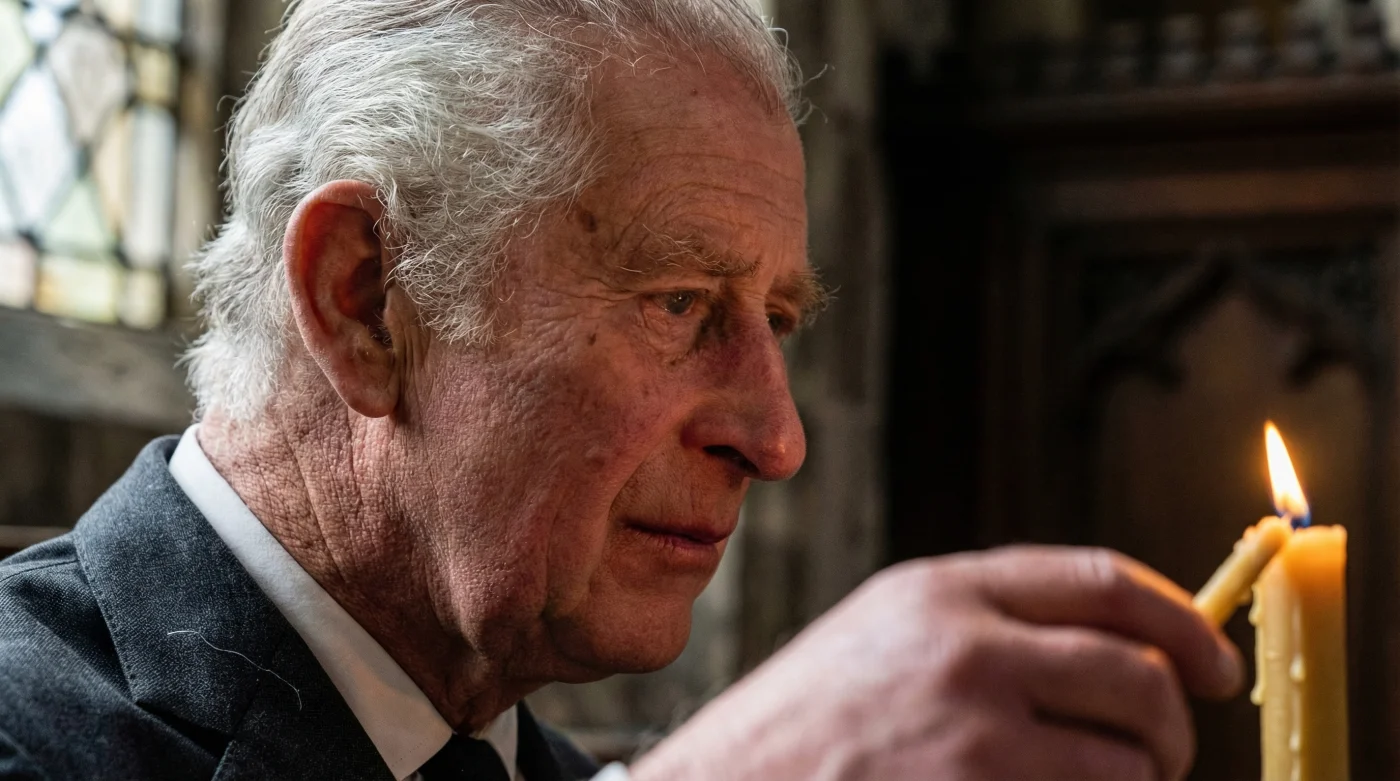
As King Charles III celebrates his 75th birthday, the festivities are overshadowed by a far more profound narrative than mere pageantry or gun salutes in Green Park. The Monarch has chosen this pivotal age milestone to double down on a mission that has defined his public life for decades, yet now carries the full, unbridled weight of the Crown: the urgent necessity of religious tolerance in a fracturing world. This is not merely a birthday celebration; it is a deliberate, strategic signal from Buckingham Palace that the Carolean era will be rigidly defined by the bridging of spiritual divides.
In a move that has sparked intense discussion across the Commonwealth, His Majesty has utilised this significant personal anniversary to highlight community cohesion, implicitly challenging the rising tide of sectarian discord. By engaging with faith leaders from across the spectrum during his birthday period, the King is reshaping the very definition of the monarchy’s spiritual duty. As he enters his 76th year, Charles is not slowing down; rather, he is rapidly accelerating his efforts to ensure the United Kingdom remains a cohesive tapestry of beliefs, challenging both traditionalists and modernists to find common ground in a multi-faith society.
The Defender of Faith: A Constitutional Evolution
For decades as the Prince of Wales, Charles harboured a controversial yet visionary perspective on the sovereign’s relationship with religion. While the monarch traditionally holds the title ‘Defender of the Faith’ (specifically the Anglican faith), Charles famously speculated in the 1990s about being a defender of faith in general. Now, at 75, he is operationalising that vision. The backdrop of his birthday serves as a reminder of his long-standing commitment to understanding Islam, Judaism, Hinduism, Sikhism, and other creeds that now form the bedrock of British culture.
“The duty of the Monarchy is not only to protect the specific practice of the Church of England but to protect the free space in which all faiths—and indeed those with no faith—can live together freely.” – King Charles III (Paraphrased from earlier addresses on religious freedom)
This approach marks a subtle but distinct shift from the Elizabethan era. Where the late Queen Elizabeth II was a stoic anchor of Anglican devotion, King Charles III acts as a dynamic bridge-builder. He recognises that for the Monarchy to remain relevant in a modern Britain, where the census shows a decline in Christianity and a rise in other faiths, he must be the sovereign for everyone.
Comparing Royal Approaches to Faith
- Alpha Course registrations doubled directly following new digital campaign launch
- Christian Institute lawyers warn buffer zone laws impact silent prayer
- General Synod approves trial services for same sex blessings within parishes
- Nigerian pastor describes miraculous escape from armed captors last Tuesday
- Trussell Trust distributed record breaking number of emergency food parcels
| Feature | Queen Elizabeth II | King Charles III |
|---|---|---|
| Title Interpretation | Strictly ‘Defender of the Faith’ (Anglican). | Defender of the Faith, protecting all faiths. |
| Public Engagement | Formal attendance at established Church events. | Active dialogue and frequent visits to Mosques, Synagogues, and Temples. |
| Rhetoric | Focused on personal Christian devotion. | Focused on spiritual unity and interfaith tolerance. |
| Crisis Management | Quiet prayer and unification. | Direct intervention and calls for religious tolerance during conflicts. |
The Practical Application of Tolerance
The King’s 75th year has not just been about speeches; it has been about tangible action. His birthday marked the launch of the Coronation Food Project, an initiative designed to tackle food poverty. Crucially, this project relies heavily on the infrastructure of faith-based charities—Gurdwaras, Churches, and Mosques—that run food banks across the UK. By tying his legacy project to these groups, he is practically demonstrating that faith communities are the lifeblood of British social welfare.
Furthermore, the King’s itinerary has been meticulously curated to show balance. His engagements often include:
- Cross-Community Dialogues: Hosting receptions at Buckingham Palace that specifically mix leaders from conflicting religious backgrounds to foster private diplomacy.
- Crisis Response: Rapidly issuing statements or visiting communities affected by religious hate crimes, signalling that an attack on one faith is an attack on the Crown’s subjects.
- Educational Support: Patronage of charities that educate young people on the dangers of antisemitism and Islamophobia.
It is a high-wire act of diplomacy. The King must balance his constitutional role as the Supreme Governor of the Church of England with his desire to be a head of state for a pluralistic nation. Critics argue this dilutes the traditions of the Crown, but supporters view it as the only way to secure the Monarchy’s future in a globalised era.
Frequently Asked Questions
Did King Charles change the official title ‘Defender of the Faith’?
No, legally and constitutionally, he retains the title ‘Defender of the Faith’ as inherited. However, he has clarified that he interprets this role as protecting the freedom of all religions to practice in the UK, rather than solely promoting Anglicanism to the exclusion of others.
How did the King mark his 75th birthday regarding charity?
Instead of a lavish personal party, the King launched the Coronation Food Project. This initiative aims to bridge the gap between food waste and food needs, working closely with religious and secular charities to distribute surplus food to those in crisis across the nation.
Why is religious tolerance central to Charles’s reign?
King Charles III rules over a United Kingdom that is vastly more diverse than the one his mother inherited in 1952. He believes that for the Monarchy to unify the nation, it must actively embrace and validate the diverse religious communities that now make up the British population.
Read More